Thursday, October 30, 2003

On pyramids October 2003


Police Camel 


Considered one of the Seven Wonders of the World the great Pyramids of Giza are possibly the most visited monuments of Egypt… The pyramids of Sheops and Chephren have stood for 46 centuries … before them lies the Sphinx .. mystery surrounds the meaning of this feline character.
lonely planet guide


‘It was not an obsession with death, or a fear of it, on the part of the ancient Egyptians that led to the construction of these incredible mausoleums , it was their belief in the eternal life and their desire to be at one with the cosmos.’
lonely planet guide


I finally made it to the Pyramids, on this my 3rd trip to Egypt. I was travelling with Leslie, a CMS colleague (Interchange advisor). We were on our way to youth conference in Pakistan via Egypt and were given an afternoon off from the ISAACS programme to explore Egypt’s heritage.


On close examination I managed to work out that pyramids have four sides, not three!  This helped me expand my definition of mission. I had often described it as a triangle, but now there were further possibilities !


They are after all full of religious meaning, so lend themselves to spiritual analogies.


At the Pakistani Youth Peace Conference in Karachi I was able to share these new insights into the work of CMS as “A movement of people in mission”.

Mission is like a pyramid with different sides: 
The 3 bits I have often emphasised in the past are: 
Proclamation, kerygma, speaking the Word of God 
Praxis, diakonia doing the Works of God 
Presence koinonia being a Witness as the People of God 
 And I suppose I have tried to live out the middle of these three through my own involvement in social development.  But I recognise how important being an authentic witness is through simply being who we are and also the necessity of being willing to answer peoples questions, which involves speaking  about what we believe in.  

But there is a hidden dimension to this pyramid -  which represent dealing with issues of Power and (Spiritual) Warfare, fighting evil structures, not people.

And I would put Praise & Worship of God is at the heart of the pyramid, at the centre of it all. 

And I suppose you could say that the the pinnacle of the Pyramid, the outworking, is the Way of Peace and Discipleship, the lifestyle of the follower of Jesus, the Prince of Peace.


from your own correspondent 
Cairo October  2003

Freedom is coming Wadi Natroun, Egypt October 2003

See full size image
I arrived at length at Cairo, mother of cities and seat of pharaoh the tyrant, boundless in multitude of buildings , peerless in beauty and splendour, the meeting place of comer and goer, the halting place of feeble and mighty whose throngs surge as waves of the sea
Ibn Battuta 

See full size image

All but 4% of Egypt is desert and the remaining land that is largely fertilised by the Nile, is overcrowded with a population of 63 million. Bedouin, Orthodox, Arab, Turkic, Nubian, spiced with Greek, Armenian, Jewish, Kurdish and Albanian. The cheapest commodity is labour.  


See full size image
94% are Sunni Muslim. But there is a large Christian community of some 5-7million Copts with other minority religious groups: Protestants, Roman Catholics and Greek Orthodox, as well as Jews and Shia Muslims.  


See full size image
Cairo, a city of 17million, is one of the world’s Mega Cities. The illiteracy rate is high (over 50%, over 10 years old); poverty is widespread and the typical diet is inadequate. Yet it is safe to walk the streets, violent crime is uncommon. But a sense of humour is most vital in this bureaucratic country of hard bargainers. 


See full size image
Drug statistics are hard to come by. 'Narcotics rife on University Campuses', according to the Egyptian Gazette (Sun Oct 1). Marijuana in its various forms notably Bhang (a sort of hemp tea) is used in Cairo, Helwan and in Shams Universities. The Police Museum in the Citadel has mounds of confiscated narcotics.


See full size image
One of the most common sights is the ‘sheesha’, a turkish hookah, with mixtures of apple and honey sweetened tobacco being sucked through a tube that runs through a water filter (hubble bubble). 


FREEDOM CENTRE 


Freedom, oh Freedom Freedom is coming 
oh Yes it is Freedom is coming

Halfway along the road from Cairo to Alexandria is Wadi Natroun, site of the Freedom Centre, This is where they take many of Egypt’s addicts. Run by Dr Ehab el Kharrat, MD, PhD (CMS part supported his studies at Cantab.). He describes himself as ‘Ehab the Arab in Rehab’

I was visiting the centre to teach on the 5 weeks ISAACS addictions counselling course.
CMS supported a Russian speaking Nigerian Doctor working in Tajikistan to attend the course. He has shared how the course has multiplied experience and knowledge and output. People have started their own centres as a result of the training.

I was only there for 3 days doing 2 workshops on the Rehabilitation Process and using Appreciative Enquiry in Project planning. Ours was a mixed group, including Julian & Shaheen from Pakistan and Vladimir from Kiev all supported by CMS. Others came form Kenya, Nigeria, S Africa, Egypt Switzerland, Philippines and UK. They were all on the course to help set up their own programmes in their own countries.


From your own correspondent
October 2003

Thursday, March 27, 2003

Istanbul – THE CITY March 2003

Istanbul – THE CITY


Istanbul is the only city in the world that stands astride two continents. The main part of the city, which forms the south-easternmost extremity of Europe, is separated from its suburbs in Asia by the Bosphorus, which flows through a deep cleft that separates the two continents in the north-western corner of Turkey. The European part of the city is further divided by the golden Horn, a scimitar-shaped estuary fed at its upper end by two streams known as the Sweet Waters of Europe, the Greek Cydaros and Barbyzes… The Horn divides the European side of the city into two parts, with the medieval port quarter of Galata on the north and on the south the ancient imperial capital itself, the old city that some prefer to call Stamboul, though for Greeks it will always be Constantinopolis or in English Constantinople.
John Freely ‘Istanbul: The Imperial City’ (Viking, 1996) pg 3-4


This is indeed as John Freely describes it,
‘the Imperial City, the capital in turn of two world empires over a period of nearly 16 centuries’. Monuments and ruins of Byzantine and Ottoman empires crown the hills on either side of the strait. ‘stin polis’ in Greek means ‘in the city’ or ‘to the city’ - needing no other name to identify it, for this is truly The City beyond compare’
John Freely op cit pg315

Now midway through the twenty-seventh century of its tumultuous existence, the City has survived sieges, sacks, conquests, civil wars, riots, plagues, fires, earthquakes, and modern construction projects; retaining its identity through successive changes of name, population, language, religion and political status; occupied in turn by Greeks, Macedonians, Romans, Byzantines, crusaders, Byzantines again and then Turks, followed by the Allied nations of Europe, with large minorities of Latins, Armenians, Jews, Arabs, Bulgars, Macedonians, Albanians, Russians and other ethnic groups during various eras of its history; its essential character and spirit enduring through the ages, almost as if it had an immortal soul. 

As Petrus Gyllius noted more than four centuries ago, when he set out to describe the topography of the imperial city on the Bospherus,
‘It seems to me that while other cities are mortal, this one will endure as long as there are men on earth.’


See full size image
In 2002, travelling through with a colleague Mark, we had visited Rev Ian Sherwood and Christ Church, known as the ‘Crimea Church’ on the Asian side. He is part of the Diocese of Europe The Church of England has been quicker adopting Turkey than the European Union.


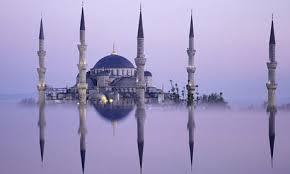
See full size imageIn 2003, we stayed in the Imperial quarter of the city, in a cheap hotel overflowing with Iranians and Russians. This year it was in some back streets nearer the Hagai Sophia, more in the heart of Istanbul. It was the haunt of Dutch and Germans. Friends of ours, who we met up with for a Turkish kebab meal were able to show us the ideal location - a cheap comfortable hotel with views of the Haggai Sophia and the Blue Mosque from the bedroom window -stunning lit up at night.
See full size image


ANGLICAN DIOCESE 

‘English congregations and churches have been established on the European mainland since before the Reformation. The number of these grew to such an extent that they were grouped from 1633 under the Episcopal care of the bishop of London, and later through a specially commissioned bishop. During the subsequent 200 and more years Anglican diocese were founded in many parts of the world. Among them, from 1842 the diocese of Gibraltar placed under the care of a bishop Anglican congregations in territories bordering he Mediterranean and other parts of south-west Europe. Northern and central mainland Europe remained under the care of the bishop of London. In July 1980 a single diocese was formed from the two areas. The Diocese in Europe is present in 42 countries with around 250 chaplainries and congregations and forms part of the Province of Canterbury’ 

from Diocese in Europe Concise Directory of Chaplaincies 2001-2002

Friday, February 28, 2003

My trip to CYPRUS by Joanna (aged nearly 9) February 2003


This is a ‘from your own correspondent’ story with a difference: written by my daughter Joanna as she accompanied me on the PiM conference. Much more interesting than my report!


 'People-in-Mission'

I went with my Dad for a week to Cyprus for a CMS conference. There were lots of people there from Egypt, Pakistan, Turkey, Lebanon, Syria, Jordan and Cyprus. They all work with CMS in the Middle East and are called ‘People-in-Mission.’ The conference was called the ‘Big Picture’. My old teacher - Miss Rowe’s aunt, Elizabeth, was also there from Salt in Jordan where she works with deaf people.

See full size image

We stayed at the Lordos Beach Hotel, next to the Mediterranean Sea. There was a small indoor swimming pool but we weren’t allowed to go in the big outdoor one, because it is only used after April when it gets warm.


During the day the adults had boring meetings and the children had a good time. Except one day we had to go and visit an American School – Grade one class ! They were learning the letter ‘G’!!!

See full size image

We went to visit Nicosia, the capital of Cyprus. It has a Green Line, which divides the city. In the north are the Turkish and in the south the Greeks. We went up a Tower and saw the whole of the city from there. We also did some shopping and had a Greek meal in a Restaurant.


See full size image
In Larnaca, we visited the Church where Lazarus was buried in, the second time he died. The first time is in the Bible (John chapter 11) but Jesus raised him from the dead. And he later escaped to Cyprus where he was the first Bishop. Later they took his bones to another place (Istanbul), so he had three tombs!

It was nice going on an aeroplane, again, except there no movies or games (if we went on Emirates they have Games and Videos, but we went with BA – Blooming Awful /Boring Airways) so it was a bit boring and long. The view of London at night, just before we landed, was amazing.


Tuesday, September 17, 2002

Teen Challenge Kazakstan Almaty Sept 2002


Teen Challenge Kazakhstan (TCK)

Everything you have seen here has been built by God. When Jesus went to Jerusalem the crowd shouted Hosanna and the donkey thought ‘they really love me here’. I now realise ' I'm the donkey'. 
Doug, TCK Director

In my office, I have many invitations from students. It is exciting to see invitations sent by students for marriage. What is success percentage? It doesn’t matter! If just 1% success it is enough. Human life has no price. This is not just our work, but it is for the whole of Kazakhstan. Go to real lives and make leaders good quality. People who did not desire to go to school; they will go to university and get good profession. Our children will continue this work. When I think like this I cannot sleep'
Chanzi, Treasurer


TCK is first and foremost a spiritual work. It has grown out of the Teen Challenge movement started by David Wilkinson and developed internationally. TCK is an independent organisation, registered as a Humanitarian Fund in Kazakhstan

Doug described the general philosophy in terms of humility, obedience (respect) and Holiness. James 1:21 ‘in humility receive the word implanted which is able to save your soul’. Like many other Christian Drug programmes, TCK is founded on the Jesus’ Nazareth Manifesto (Luke 4:18-20). Setting the oppressed and captives free (Is 61:1) who are called: ‘Oaks of righteousness, the planting of the Lord (61: 3). But unlike many other rehabs TCK goes on to do the rest - ‘rebuild ancient ruins…. raise up former devastation… repair ruined cities’ (61:4) and ‘strangers will pastor …. and foreigners will be farmers’ (61:5); they will be ‘called priest of the Lord, Ministers of our God’ (61: 6) It is all there in TCK: Detox & Rehabilitation, counselling and discipleship, building and renovation work, foreign leadership, and church mission and ministry.

Doug shared a dream of steering a big ship. He had tried to avoid rocks and beached the ship. Later whilst driving the interpretation hit him - a revelation from God. ‘I have given you a ministry; your job is to steer it. You can’t control its size; you can’t avoid problems, just keep on course. The ship can go over rocks, so don’t avoid them.’ He added that on the beach when he looked up ‘it was a huge container ship some 9 stories high’


TCK has seen remarkable growth! It has grown exponentially over the past few years, so that now there are 9 different programmes serving some 200 recovering addicts. Men, Women and Children, Detox, Rehab and Vocational training, prison ministry, awareness a sports club and other prevention activities And even a School. In all there appear to be roughly 2000 direct beneficiaries and 150 staff. This growth is due to the political and economic environment in Kazakhstan, as well as the vision and drive of Doug and staff. And of course the ‘hand of God’.

It is well respected as the oldest Therapeutic Community (TC) in Kazakhstan. It is therefore positioned to exert great influence. Baroness Cox’s arrival was a great political coup d’etat in that it increased credibility, and demonstrated some political muscle. This appears to have had positive results so far.


I joined the programme in 1996 a drug addict for 15 years, thinking ‘what for am I living?’ One day, sister introduced me to programme. I felt so empty. I was told that in 1½ months, I would be free from drug addiction. I met others who said ‘we are free’. Trust God, trust us, you will change! God came into my heart. My life was empty and hopeless – useless, no joy. I felt I could never change, but now I am happy and have hope I have everything. I have found life and can see a future and have hope. I am so grateful to the programme, to these men.
 
Yerbo, Farm Manager 


I realized, through visiting, that TCK is not a subsidiary of TC-USA International, the MacDonalds of the Drug Rehab world. But TCK is much more autonomous. Although it does use the TC International materials, it is not dependent on the mother organisation. In fact is operating fairly independently. Not so much the MacDonald of the drug rehab world, more a Central Asian ‘Shashlik’


*******************

See full size imageI was able to attend the Graduation at the end of my visit - a moving affair, opened by children of New Beginnings School singing the National anthem. Kazak and Kyrgyz dancers also preceded the presentations of graduation certificates to various groups. The women’s rehab, refuge and workers. Boy’s and Men’s rehab and workers. TEFL teachers. And more Kazak songs - around 90 people receiving certificates Presided over by Doug with Baroness Cox as the chief guest, brought by Sam, an Iranian from Surrey. She was in Kazakhstan to make representation on behalf of Teen challenge to the President wife and the Mayor of Almaty concerning 3 buildings. Teen Challenge was fighting a court case over the 3 buildings.

Besides a Baroness, they were presented by a local councillor who has supported the programme, a member of the Drug Committee, The Assistant British Ambassador, a representative from British Council (for the TEFL). And I was representing CMS, Tearfund and ISSAC! Certificates were presented to all who were 2 years drug free and also staff who had been through an 18 months training course. It was the ‘piece de resistance’ and the support offered by Baroness Cox was very tangible and timely. Expressions of support have been made by the Kazakh government, for example for the orphans in the Beginnings School. The event was carefully orchestrated - but not ‘over the top’.

It was very helpful for me to get a fuller grasp of the extent of their programme and the high regard with which it is held. Local government was well represented by a man who genuinely supported and appreciated the work. (I spoke to him afterwards). 9 projects were presented - 9 parts of the overall programme in all I wondered if the 9 programmes corresponded to the ship ‘9 stories high’ in Doug’s vision.

I travelled back on KLM with Baroness Cox and Sam, not VIP, or business class, I was pleased to see, but economy class, full of normal, crowded humanity. Lord Longford called her a ‘Christian champion’. Andrew Boyd, in his biography, highlights
‘her concern for the oppressed, the repressed and the vulnerable – those least able to articulate their needs and their rights. Caroline Cox strives with a passion to be a voice for the voiceless, whether on the home front in the United Kingdom or abroad, speaking for the forgotten peoples in forgotten lands’.
See full size image
Andrew Boyd ‘Baroness Cox: a Voice for the Voiceless’ 
Lion 1998 Pg 435


Addicts, street-kids and battered women in Almaty now consider her such a voice, their very own Baroness. They also have a couple on the ground in Doug & Anna.


From your own correspondent

Amati Sept 2002

Tuesday, May 14, 2002

A sermon in cloth Sri Lanka May 2002

 A Sermon in cloth

Visit to Emmanuel Memorial Church Maradana, Colombo 10


As part of the ‘Called for Peace Youth Conference’, 3 of the cell groups were attending the 8:30 communion service in order to understand more the Sri Lankan context.

Built in 1912 by a CMS missionary, the Emmanuel Memorial Church has a membership of 110 families and a healthy Sunday morning congregation of 150, plus 50 children. They are Tamil speaking from mainly poor and middle class. This is the congregation of Rev Prince Devanandan who had been such a leading light in our Youth conference.

Bits of the service were translated for our sakes. It felt so familiar even through they were singing in Tamil. The liturgy was the same. A large colourful banner hung behind the pulpit depicting the 'Journey of Faith’. This was produced by the congregation to mark their 90 years of existence. There are 5 references on the banner, which sketch out the direction they want to take, leading to their centenary.
‘Doing the will of God’ (Phil 2: 13)
‘Guarding the faith’ (2 Tim 4:7)
‘Repairing & building relationships’ (Gen 32: 4 & 20)
‘Building up Kingdom of God through evangelising and social service (Act 13 2& 3 Matt 25 31-46)
‘Being persistent in serving others’ (Gal 6:9)
It is a good vision. A whole sermon on cloth

We are asked to bring greetings. I found myself apologising for the Anglican Church - so British in its architecture - and the legacy we had left behind. That forced them all in stiff pews that restrained their own cultural norms and enthusiasm. The people are so warm and friendly. , so Sri Lankan. The church building, so British.

The service finished with children coming for a blessing during the last hymn. They burst out of the pews, joyfully breaking out of all traditions. Rev Prince explained that children are a symbol of the kingdom and a sign of hope for ‘the children of today are the church of tomorrow’. ‘Yes and No’, I thought. They are an integral part of the church of TODAY not just tomorrow. They help us to stop being so adult, so religious. Thank God for children, who do not conform to religious stereotypes – ‘Forbid them not, for such is the kingdom of heaven’


The opening ceremony at the Called for Peace Youth Conference held in Sri Lanka


With their National flags on display, delegates from India and Pakistan pose to celebrate the treaty between the Christian Youth of their Nations. This was a spontaneous event in response to a million soldiers on their national borders, paused on the brink of war, They covenanted to pray and ‘build the bonds of peace’, no matter what happened between their churches and nations. Their overlapping flags are another sermon in cloth – a sermon about the one who breaks down national walls.


from your own correspondent

May 2002

Thursday, February 28, 2002

Accross the Lines, Israel-Palestine, Feb 2002


Our CMS delegation was in the Land of the Holy One at a very significant time, a relatively peaceful window of opportunity, before the current high level of violence flared up. We had entered the complexity of this part of what many call the ‘Muddle East’. We had observed, listened to the voices of those we met, heard heartbreaking stories, experienced at first hand what is often reported in black and white. And now we, in turn, report in black and white all that ‘we have heard, which we have seen with our eyes which we have looked at and our hands have touched… this we proclaim’ (1 John 1: 1) We therefore concentrated on reporting rather than interpreting.


See full size image

We never did cross the line completely. No-one can. Our partners are mainly Palestinian Christians, ‘Living Stones’ as they are so often called. Institutions we have related to for over 150 years. We did meet with the CMJ reps and also Messianic Believers, but we never did hear the voice of the Russian Emigrant, living in the newly build settlements. However we did meet a young Jewish Zionist, who was demonstrating against the Women in Black. His name was Sloma from Detroit and he was keen to shout out a number of ‘proof texts’ (such as Ezekiel 37:21-27, Ez 48:30, Zeph 8:19, Josh 1: 2-4, Gen 1:14, 12:3, 15:18, 16:12, 17:8, 17:21, 35:10.) With the Israeli flag on his shoulders, he was emphasising his perceived right to return to dwell on land given to Jacob. Expounded his theology of the land, he was possessed with a passion. He listed his grievances -
‘If you say anything against Arafat you will be killed. He is sending young children to the front line as suicide bombers. Theirs is a Muslim mind-set, illogical. They do not think like you and I’.
It is hard to engage with fundamentalism, such passionate believing. I tried to get him to look at scriptures other than the ones he was quoting so fervently - that emphasise justice and mercy and hospitality to the stranger in our midst. (e.g. Micah 6:6 Hosea 6:6) But its difficult to hear when you are shouting.

See full size image
The Jerusalem Post carried an article on a peace activist, Eliyahu Charanamarit McLean  part of a group that meets facing the western wall every Friday at noon, praying for understanding, tolerance and reconciliation between Palestinians and Israelis. 

'People ask me: Are you right wing or left wing? I reply It takes two wings to fly .... and we can fly when we yearn and work together towards harmony and wholeness, when we speak from the heart and learn to respect each other's differences. Then true peace can come to all of us who are blessed and destined to share the Holy Land together'

CMS is committed to Peace Justice and Reconciliation in the Land of the Holy One. If we are indeed going to fly with this one, then we too need those 2 wings. We need to relate to Palestinian Arab Christians and Messianic Jewish Believers. We also need to emphasise the things that make for Peace, between the three Abrahamic religions. Especially in the City of Peace, where mosque synagogue and church seek to co-exist, as on the tile from the Armenian Pottery that has inspired us all.


from your own correspondent 
CMS Palestine-Israel Delegation February 2002

UPDATES 
for statement see the CMS web archives 

It takes two wings to fly   Jerusalem Post 
Jerusalem Peace Makers:  Eliyahu Charanamarit McLean


Wednesday, October 31, 2001

Afghans not Afghanis London Oct 2001


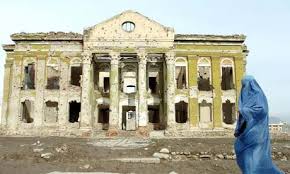
‘afghanistan 2001’ (2001) by james nachtwey    © photo james nachtwey/vii agency


Afghans not Afghanis,     London, Oct. 2001

’The people of Afghanistan need a miracle - let’s seize this opportunity to gather together and call upon God on their behalf at this time of global crisis’

Graham Kendrick 25th October 2001 
at Prayer for Afghanistan event at Westminster Central Hall

On the 25th October I was involved in organising an evening of prayer for Afghanistan at Westminster Central Hall, led by Graham Kendrick and Lyn Green of YWAM, and run jointly by Tearfund, CMS and Ichthus.


Afghans 


It was a wonderful time.  We prayed for the country and its people. And at last we felt we were able to DO something positive. 


Afghanis 

This is a 100 Afghani note, no longer legal tender in Afghanistan. It is worthless. It won’t even buy a piece of bread. The smallest note is a 500 Afs. The exchange rate is around 100,000 Afs. to the pound. We often hear people on the news wrongly calling people ‘Afghanis’. The people are ‘Afghans’, the currency is ‘Afghanis’. The currency, Afghanis, has been devalued. The people, Afghans, have not! They are all priceless human beings.


WHEAT & WATER

On the note is a picture of the Serobi Dam, full of water, on the Road from Jelalabad to Kabul and also a man threshing wheat in a fertile valley. It is a picture of what Afghanistan was and no longer is. The country has been devastated by nearly 25 years of war and 3 years of drought. It is a Humanitarian Catastrophe. Millions face starvation. Afghanistan is desperate for basic food Aid.


SPRING & HARVEST

• Pray for Rain. (And for springs of living water -John 4:13-14)
• Pray for Food. (And to the Lord of the Harvest for the bread of life -John 6:31).


From your own correspondent


Friday, October 19, 2001

Journey into Cyprus October 1999


Journey into Cyprus

Cyprus republic and third largest Island in the Mediterranean Sea. (225 km long and 97 km wide: an area of 9251 sq.km). Greek speaking 
Cyprus makes up about 80% of the population. About 18% is of Turkish extraction, and the remainder is made up of Armenian and other ethnic groups.

Both the Greeks and the Turkish communities retain the customs and to a great extent the national identities of their co-religionists on the mainland. Since the Turkish invasion of 1974, mass migrations of Greeks and Turks have taken place, so that now the two groups are geographically separated. The Greeks occupy the southern two-thirds of the island and the Turkish Cypriots occupy the Northern third.

The people are predominantly farmers who work the land surrounding their villages. Members of the Greek community adhere to the Church of Cyprus, which is in doctrinal agreement with the Eastern Orthodox church, but is independent and has no allegiance to any patriarch. The Archbishop Primate, who is Bishop of Nicosia and the three other Bishops of the Cypriot church are elected by the church membership. The Turkish minority is mostly Muslim. Other small religious groups include Maronites (Christian Arabs), Roman Catholics and Jews.
Cyprus’ Microsoft Encarta

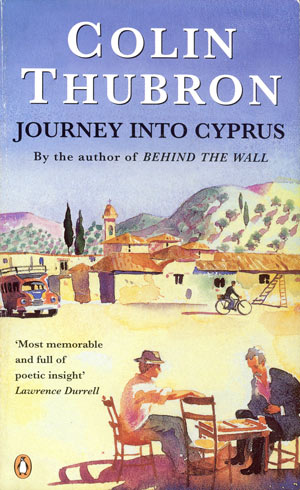
I was travelling to Aphrodite’s Island for the third, maybe even the  fourth time. At the time, I was reading Colin Thurbron’s ‘Journey into Cyprus’, detailing his 600 miles trek on foot around Cyprus in the last year of the island’s peace. It’s a book rich in succinct insights. He explains how, since his journey, the two parts of the island have been stamped with their own personalities:‘The north has fallen into neglect, the south into over-exploitation.’
He also offers a helpful explanation for the religious mixtures that abound:
‘Dig up a saint and you uncover a god!’
In Cyprus, religion seems to be as layered as its history.
‘All over the Levant, the ruins of Aphrodite’s temples are betrayed by trees hung with the clothing of diseased petitioners, by candles and figurines which are offered to ‘the Lady’. In uninterrupted worship, Aphrodite has become the Virgin Mary. The temple itself falls, the deity remains’.

This is folk religion at its most basic - so apparent and endemic in the region. I visited an orthodox church in Lefkara, a village famous for its lace: ‘Lefkaritika’. I wasn’t so much interested in the lace, more the legends. 


This was an ordinary village church, with its grotto of saints and icons. Among the candles and coins were wax limbs – arms, heads, legs - representative body parts. ‘For the icons effect cures’, explains Thubron.
‘Conceived in a time when medicine could do little, they had to cope single-handed with the fears and sicknesses of the Christian world. Cyprus alone is filled with these immemorial doctors whose bedside manner is one of numinous and infallible strength. They nestle propitiously behind spinneys of candles and drip with ex-votos: silver arms, legs, ears, eyes, hordes of coins and necklaces, wax statuettes. They cater for even trivial ailments. St. Yennadios of Mononero, who was frozen to death by the Cypriot winter, can cure the common cold; St Antipas soothes tooth-ache; St. Procopius will banish boils; and the lion-riding St. Mamas at Troulli, as well as dealing with tax matters, will relieve sore throats’


It seemed to me that in this Region where churches and mosques, priests and mullahs almost look identical, there is much room for authentic religion, which answers people deep needs for health, hope and healing.

From your own correspondent
October 1999


Sunday, September 30, 2001

September 11th, 2001


September 11th, 2001

After the accounting of the dead,
when the insurance claims are settled,
and the markets are back to their normal jittery selves,
we have all seen what Hell looks like. In future
we will avoid tall buildings, slowly move away
from cities, fly less often, view
our fellow passengers with circumspection,
seek refuge in more virtual reality and trade
within the safer evils of the Internet.
We listen doubtfully to our leaders' words
as they struggle to fill their own shoes.
Four planes just flew out of Pandora's box,
and when men armed just with razor blades can bring
the whole wide world up to a juddering halt
we know too much and care too little
to believe that this will be the last time.
The big game of Monopoly is over.
The losers' tantrums have become too dangerous.
Even before our anger cools we see
the moral high ground is just
a pile of smoking rubble. Jesus kneels
and writes with his index finger in
the white dust of Manhattan:
Let him who is without sin
launch the first missile.

Who is our enemy
and what can we fight him with?
Where are our allies? Where was God
on September the Eleventh? He was begging
in old clothes in the subway
beneath the World Trade Centre.
He was homeless in Gaza,
imprisoned in Afghanistan,
starving in Somalia,
dying of Aids in an Angolan slum,
suffering everywhere in this fast-shrinking world;
and boarding a plane unwittingly in Boston,
heading for a meeting on the 110th floor.
When the time came he stretched his arms out once again
to take the dreadful impact that would pierce his side.
His last message on his fading cell phone
once more to ask forgiveness for them all, before
his body fell under the weight of so much evil.
We bring our cameras to his massive tomb
for any chance of resurrection; now we know
the kind of story that it really is,
united by this common enemy -
sin's terrorism - that we never dreamed
could bring such devastation. This is war.
We line our weapons up: faith, hope, obedience,
prayer, forgiveness, justice;
the explosive power of love.

(c) Godfrey Rust

May be used or copied freely for non-commercial purposes. godfrey@wordsout.co.uk

Thursday, September 27, 2001

Back to the Frontier: PESHAWAR Sept 2001


Inhabited by fierce warlike tribes, the region that became known as the North-West Frontier has always guarded the western border of the sub-continent. The hilly, arid region that is now south eastern Afghanistan and north-western Pakistan has since ancient times been the Pathan’s homeland’ (Pukhtoonkwar)
The Pathans are one of the world’s great warrior races and yet the ‘jirga’ system, upon which their society is based, is one of the oldest democratic systems known to man.
The independent spirit of the Pathans was behind the immortal words uttered by the 17th century Pathan Poet, Khushal Khan Khattak when he resigned from the Moghul army: ‘So long as I was an officer, I was a servant; the office gone, I am a King!’


Imran Khan’s ‘Warrior Race: a journey through the land of the Tribal Pathans’ (Chatto and Windus, 1993) The Pakistani international cricketer getting in touch with his Pathan background.


Introduction & Overview 
The North West Frontier Province (NWFP) is the wild-west of Pakistan, part of the untamed, semi-autonomous FATA areas (Federally Administered Tribal Areas). Pathan culture is one of the oldest democracies, with the ‘Shura’ (village elders) system, and a strong tribal code ‘Paktoonwali’ with its emphasis on honour and shame, relationship and revenge, hospitality and hostility. Women are closely guarded and cocooned behind ‘chadar and chaar diwaar’ (cloth covering and 4 walls)

Steeped in history, this is where Churchill as a war correspondent took pot-shots at Hill Tribeman (as recounted in ‘My Early Life’). Untamed by the British Raj, it was a final outpost of the Empire before the Durand Line, running through Afghanistan along the line of the Oxus River (now the Amu Darya) separating the ‘British Lion’ from the ‘Russian Bear’. This is where the Great Game was played immortalised by Kipling’s Kim. Full of romanticism, adventure, treachery. Boy’s Own country.

Since the Russian Invasion of Afghanistan in 1979, Peshawar has been also been ‘deluged’ with over a million Afghan refugees. It has been a hot-bed of intrigue, drug smuggling (Afghanistan is the World’s No. 1 producer of opium) and guns (Darra Village where any weapon can be copied and Kalashnokovs sells for a few pounds). This is all symbolised by ‘The Khyber Pass’, connecting Afghanistan and Pakistan.

35Km from the Khyber Pass lies Peshawar . The first Afghan refugees began trickling in, in mid 1978 and it soon became a deluge. As a result of the war, Peshawar began to establish itself as a principal humanitarian centre and launching pad for ‘diplomats, reporters, intelligent agents, war junkies, smugglers, drug enforcement officials and various travellers’. By the late 80s some 200 international agencies and NGOs had established operation bases in the town. ‘It had returned to some of the exhilarating frontier flavour of Kipling’s India’ Even today when the number of NGOs have been greatly reduced, ‘Peshawar will remain a Pakistani-Afghan commercial centre whether for licit or illicit trade’Peshawar is in effect a three-in-one town, the traditional Old City with its colourful and chaotic bazaars, the tranquil and clean Military Cantonment, with its gardens, sports centres and Institutions and University Town, the International expatriate and NGO hub.

Crosslines Guide to Afghanistan, op cit, pg 361

I spent 12 years in Pakistan, so I feel I know it well, maybe too well. But my time was spent mainly in Karachi in the South with nearly 3 years in Peshawar in the North. But the NWFP and the Afghans got into my system in a significant and powerful way.

Every time I return something strikes me. This last time it was the Red Mountain, which has sprung up in urban centres, a grotesque, luminescent model of the mountain nuclear test site, which enthralled the Nation on TV, as it glowed an angry red in response to the Indian atomic challenge. An effigy to Pakistan as a Nuclear Power.


Thursday, September 20, 2001

Breaking News Sept 2001

BREAKING NEWS ……………BREAKING NEWS …..…………..BREAKING NEWS


EXODUS
See full size image

Afghanistan is headlines in the Global News Media. Afghan Refugees trying to walk through the Tunnel from Calais to Dover. A shipload of 500 seeking asylum on a cargo ship near Christmas Island. A contemporary ‘Exodus’ is underway. Afghans fleeing drought and war and the increasingly repressive Taliban regime.


ACCUSED
See full size image

A month ago the Taliban arrested 8 expat and 16 Afghan NGO workers with Shelter Now International (SNI) accusing them of proselytising. On trial in a closed court under Shariat Law, they face increasingly probable execution. How do we protest ? International pressure does not work - the Statues of the blind Buddha of Bamyan were blown up in spite of, or perhaps because of, world media pressure.
‘World leaders…. are on a hiding to nothing if they think they can undermine the Taliban or other manifestation of Islamic fundamentalism from outside. They have to stay seriously listening to such movements and perhaps even recognise the right of countries to govern their own affairs even in ways which are not democratic. But for now, every effort must be made to seek clemency for aid workers whose only crime is to take their faith as seriously as do the Taliban’.
Andrew Carey ‘Saving the Afghan Aid workers’ CEN Aug 17th

CLOSED DOWN
See full size image

The next stage in the drama came when 2 other Christian NGOs: Serve and the International Assistance Mission were also closed down by the Taliban and given 3 days to leave the country. All assets were ‘confiscated’ by the Government . 

‘Despite recent events in Afghanistan, IAM is stunned by the sudden and total closure of its activities. The IAM is very concerned about the effects of this action both on local staff and programme beneficiaries. Hundreds and thousands of people will be deprived of vital assistance at this critical time.’
IAM Press release 1st Sept

ATTACKED
See full size image

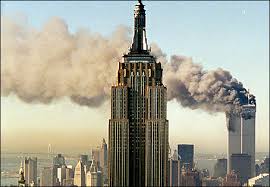
Then came the Big One. The terrorist attacks on New York and Washington that shocked us all. How could they do it? The world will indeed ‘never be the same again.’ An International Terrorist Conspiracy. Or is it modern Chaos or Complexity theory? Lorenz’s famous phrase ‘A butterfly flaps its wings in South America and results in a Hurricane on the other side of the world’ Those terrorist ‘butterflies’ in the US have certainly unleashed a military ‘hurricane’ which threatens to destabilise the whole of Central Asia and the Middle East. 

Situation in Pakistan is very calm at the moment. It will be different when there is a war or attack on Afghanistan. …. No Church has been burnt in Punjab so far.
Bishop S.K. Dass of Hyderabad (18/9) 

BROKEN
See full size image

For all of us, this is heart-breaking News. Many mission partners have had to leave Pakistan. All Humanitarian Aid workers have left Afghanistan. The only ones left are those in custody in Kabul. And many Afghans are desperate to leave as well, refugees piling up on the borders. The UN are making preparations for a massive human disaster - the feeding of the 5 million. 


Doves and Hawks 
See full size image

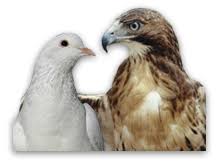
‘Blood cries out for blood’. People call for Retaliation and Restraint. The Doves and the Hawks debate. But the Broken One cries out ‘Father forgive’ even as He gives his blood for the world.


from your own correspondent 

printed in YES magazine Sept 2001