Showing posts with label Orthodoxy. Show all posts

Thursday, September 22, 2005

Alpha and Omega METROPOLITAN FILARET in London July 2005


The Metropolitan of Minsk, the No 2 in the Russian Orthodox hierarchy, has a long Gandalf-white beard. He was on a 4-day programme visiting potential partners, ‘dignitaries’ and VIPs in UK. As well as a visit to the CMS office, he also visited the Archbishop of Canterbury. Timothy Okroev, my Russian Orthodox colleague. On this occasion, as well as our Regional Manager, he was acting as interpreter and guide.


The group visited the Archbishop of Canterbury, Rowan Williams, a key figures in the official Orthodox-Anglican Dialogue. The Archbishop, as its Patron, encouraged CMS to also support the Orthodox Church in Belarus in its theological education, evangelism and ministry to the poor.


Alpha at HTB

The Metropolitan also went on to a meeting with Alpha at Holy Trinity Brompton (HTB): My colleague Timothy writes:

'We had a meeting with Sandy Miller and Nicky Gumble joined by father Evmeniy from the Russian Orthodox Church.
HTB told the metropolitan more about Alpha and how it contributed to the spiritual revival in England, attracting a lot of young people. As a result of this meeting Metropolitan Filaret instructed father Evmeniy to study the “Alpha phenomenon” and report to the Holy Synod. It may well be that, once the report is completed Evmeniy will become the person to be officially entrusted with developing Alpha in the Orthodox context. This is probably one of the greatest outcomes of Metr. Filaret’s visit to England. After the meeting with the two Alpha gurus, the metropolitan was asked to speak at the opening of the International Alpha Conference at HTB that day. He addressed the audience of 500 Alpha delegates from across the world in a very open and charismatic way. He raised his hands and started praying for Alpha in this country, Alpha in every country where it brings people to Jesus, etc. He then said: “I think it is incredible that you have discovered the tool that helps you bring thousands of young people to God. The Church has always had tools of evangelism but I encourage you to continue developing Alpha, so that you may reach out to those who feel spiritual hunger in today’s world of despair and godlessness”. Astonishingly, he than said another prayer, this time the prayer of invocation of the Holy Spirit… The audience was surprised – they had come with prejudices against the Orthodox: “Alpha will never be accepted by them”, and here they were standing for the blessing of the Orthodox hierarch. We hope that there will be a direct link now, as a result of this meeting between the ROC and HTB. Nicky is keen to invite the Orthodox to their events. They are also planning to visit Moscow in January as another step forward in our common vision for Alpha in the Orthodox context. A very high, key profile was given to CMS at the opening, as Nicky emphasised that CMS vision is for helping the Orthodox ‘own’ Alpha as their own evangelism tool’.

I am always amazed at our ability in CMS to relate across the huge variety of churchmanship. And hence the unique position we have in building bridges between extreme groups. Perhaps this represents a new beginning, or even an end to traditional separation.

Alpha meeting Omega.

Friday, September 17, 2004

The Metropolitan and the Mufti Aleppo Sept 2004


Christians are better off in Syria than anywhere else in the Middle East. Other than Lebanon, this is the only country in the region where a Christian can really feel the equal of a Muslim – and Lebanon of course has many other problems. In Syria there is no enmity between Christian and Muslim. If Syria were not here, we would be finished. Really. It is a place of sanctuary, a haven for all the Christians; for the Nestorians & Chaldeans driven out of Iraq, the Syrian Orthodox and the Armenians driven out of Turkey, even some Palestinian Christians driven out of the Holy Land by the Israelis. Talk to people here and you will find that what I say is true’

Mar Gregorios in Dalrymple’s book 
From the Holy Mountain (Flamingo 1998) page 150

When William Dalrymple, author of the ‘From the Holy Mountain’ met the Metropolitan he described him as a
‘small round figure’ who walked in backwards telephone in hand, talking animatedly ‘He turned a pirouette and advanced towards me his free hand extended. He finished his telephone call, snapped shut the phone with a flick of his thumb and popped it into his cassock pocket.’ He then showed him some architects plans and blueprints that were on a table.


The scene was almost exactly re-enacted for us. Archbishop Yohanna 
Ibrahim showed us plans for an old people’s home in the new Syrian quarter – on 7537 metres of land given by the government. The blue print had 4 floors of hospital and 2 floors of an old peoples’ home. ‘How can CMS help with the construction?’ was the implied question.

Christians are a sizable presence here. Christians are now around 5% of the population but at one point there were as many as 50%. There are 11 denominations: 6 of them Catholic and many churches. The Syrian Orthodox church is growing and rebuilding itself, even though many are still leaving for the West. ‘But Syria is still a place where a Christian can feel an equal citizen with a Muslim.’ the Archbishop assured us. 

Like so many in the region, the archbishop hospitably dropped everything to show us around his diocese. 

Our tour included 2 Schools, a Clinic, a Hospital and a Church.First a private co-ed school - Ben e Talub – which has 800 primary students in years 4 to12, around 300 of them on scholarships, supported by World Vision. According to the register, the St Ephraim dispensary saw 17,164 patients in 2002. It is a converted old ‘Bohemian’ house in popular city centre, where about 25 are treated and a further 25 referred per day. While we were there, a young Muslim woman in Hijab (head covering) was visiting the dentist, whilst she happily let her baby be looked after by the Christian staff. 


At the second dispensary, in the Syrian quarter of Hay Sulemania, a dentist and a general medic see around 5000 patients per annum.The Diocese also has a Hospital, started by Dr. Altonian in 1918. He is famous for bringing the first X-ray to Syria. We saw a display case of old instruments, including gold nails for orthopaedic work and ivory ophthalmology instruments.A nurse was nursing her father who had recovering from a RTA. Another Armenian nurse ran the gynae ward. The hospital had 2 operating theatres, a delivery room and an ophthalmic theatre.


In Azizi the Church of St George celebrates the story of King Abgar. He wrote to Jesus to come and heal him. According to tradition, Jesus sent one of 70, the disciple Adai, with the‘Mendellion’, a face cloth, which produced the necessary miracle and healed the king. This became the first principality to be baptised Christian. 


The church has an attached school, built with $ 1/4 million, donated by a parishioner in Belgium. ‘It was reburbished a week ago. We are still getting organised’ explained principal Sarah Ghramji. CMS-Interchange may be able to arrange for her to visit schools in UK to help improve the standards. Not so much investing in buildings, but more in people.Mar Gregorios was apologetic: ‘We have everything here, but on a small scale’. He certainly has big vision.


'The Mufti of Aleppo'   Ahmad Masoun


“Once a child asked me ‘why does religion came from hot country ?’ I told him it was to raise the temperature in the cold countries!”


The Archbishop took us to meet the Mufti. ‘Pepper and Salt’ I called them. His house had a special reception room for guests – with chandeliers and walls lined with bookcases, full of Islamic books and treatises. ‘Mufti’ means the ‘one who gives interpretation’. His base is the mosque of Rowda garden where 30-40,000 go to listen to him in mosque. With the recent death of the Grand Mufti of Syria, he is a possible candidate. He was charming, open and full of hope, good news in the midst of so much bad interfaith. Over honeyed tea, he spoke of many things. About the need for real dialogue - not just a constitutional dialogue. Aleppo is a good example of this. Inter-faith is in the open – it’s on the street. The two faiths work closely together.

Syria and Palestine are the seed-bed of religion. The prophets came from here – It is the place that God chose.Christians, especially Arab Christian, have a lot to contribute –‘It was a fatal mistakes to evacuate minorities from the area’…‘Christians and Muslims have been brought up here as brothers, We even shared the same wet nurse….Local mothers feed each others babies.’
There is an old old tradition of Mariam's feast (sufra) to remember Jesus birth, because there was no one there to celebrate, when He was actually born. ‘So we also celebrate today, as Muslims. This is a tradition my grandmother taught me.'


There was great openness between the faiths until the Zionist state was formed. Then it went bad…This ‘clash of civilization’ is not of God. Religion does not clash in itself. Although Protestant religion is ‘man-made’, he corrected ‘they use the Bible as a front - But there should be no fight between two prophets. The war in Iraq has severely damaged co-operation. Everyone knew what would happen. I said you must think before you open fire…this fire will burn you… it opens the doors to hell. It is always more difficult to rebuild than to destroy. The key to hell is in the hands of politicians: the key to heaven is in the hands of religious leaders.


We always pray for Palestine, but together the politicians seem determined to keep the door of heaven firmly closed. The Sons of Abraham should not be teaching animosity and war! My hope is that pain will cause people to return for healing, but are we ready to comfort the people as they return to God?

He was very happy and proud and most encouraged by the example of men of faith. He sent warm greeting to the Archbishop of Canterbury, together with Prince Charles, especially appreciating their stand and statements in the arena of interfaith. ‘But not to all religions leaders in Britain’ he added, ‘some are failures!’ His parting message to the people of the UK, who keep carrying the message of peace:
‘‘if the flames continue, everyone will catch fire… we can only extinguish them by light.’


The Mufti showing a model of the Kaaba. - He has suggested that, in the spirit of openness, Christian groups should be allowed to visit. Maybe this will be the first ‘Praxis Mecca’ !


The Archbishop of Aleppo’s words about coexistence certainly seemed true. The Syrians Christians we met appear to experience refreshingly good relations with Muslims. But the last word goes to our driver, Raymond, an accountant who recently returned from Saudi.
‘We have a good future between the religions. I have seen it with my own eyes. We do not need to leave. His eminence is giving us a good hope’.


From your own correspondent
Aleppo: Sept 2004

Thursday, April 01, 2004

Positive Testing Romania April 2004

POSITIVE TESTING  - AN APPEAL FOR HELP 

Enriut knew he had a blood problem and that he needed help, but the nearest testing centre was over fifty miles away. After his long despairing journey, his worst fears were confirmed. He had tasted positive. He told his friends about it and they were totally shocked.
“We just don’t talk about these things. You’ll lose your friends if you do. Nobody understands about this blood problem, just pretend it’s a cough.”

Enriut is one of hundreds of people with this serious blood problem in this part of the region and CMS and its local partner are trying to raise awareness as well as setting up local blood testing centres, so that people like Enriut do not have to live in darkness in this remote part of the country.

Will you help this vital and vibrant project in Transylvania? - in the wild and remote hinterland of Romania, as part of an unorthodox alliance between CMS and the Orthodox church.

We desperately need to develop a new remedy. ‘
The Garlic sauce is just not working’
says CMS Mission Partner, Frank N. Stein from the Wurtenberg Church in Germany.
‘We want people to be able to drink from the fountain of immortality’

“He coughed constantly but there was still the old spark in his eyes.”


Your gift of just £36.19 will help keep Enriut and his friends from a fresh supply of blood for a month. DO something NOW! You CAN make a difference!!


From the Fundraising team of
Carpathian Mountain’s Salivation (CMS) Project

Thursday, March 27, 2003

Istanbul – THE CITY March 2003

Istanbul – THE CITY


Istanbul is the only city in the world that stands astride two continents. The main part of the city, which forms the south-easternmost extremity of Europe, is separated from its suburbs in Asia by the Bosphorus, which flows through a deep cleft that separates the two continents in the north-western corner of Turkey. The European part of the city is further divided by the golden Horn, a scimitar-shaped estuary fed at its upper end by two streams known as the Sweet Waters of Europe, the Greek Cydaros and Barbyzes… The Horn divides the European side of the city into two parts, with the medieval port quarter of Galata on the north and on the south the ancient imperial capital itself, the old city that some prefer to call Stamboul, though for Greeks it will always be Constantinopolis or in English Constantinople.
John Freely ‘Istanbul: The Imperial City’ (Viking, 1996) pg 3-4


This is indeed as John Freely describes it,
‘the Imperial City, the capital in turn of two world empires over a period of nearly 16 centuries’. Monuments and ruins of Byzantine and Ottoman empires crown the hills on either side of the strait. ‘stin polis’ in Greek means ‘in the city’ or ‘to the city’ - needing no other name to identify it, for this is truly The City beyond compare’
John Freely op cit pg315

Now midway through the twenty-seventh century of its tumultuous existence, the City has survived sieges, sacks, conquests, civil wars, riots, plagues, fires, earthquakes, and modern construction projects; retaining its identity through successive changes of name, population, language, religion and political status; occupied in turn by Greeks, Macedonians, Romans, Byzantines, crusaders, Byzantines again and then Turks, followed by the Allied nations of Europe, with large minorities of Latins, Armenians, Jews, Arabs, Bulgars, Macedonians, Albanians, Russians and other ethnic groups during various eras of its history; its essential character and spirit enduring through the ages, almost as if it had an immortal soul. 

As Petrus Gyllius noted more than four centuries ago, when he set out to describe the topography of the imperial city on the Bospherus,
‘It seems to me that while other cities are mortal, this one will endure as long as there are men on earth.’


See full size image
In 2002, travelling through with a colleague Mark, we had visited Rev Ian Sherwood and Christ Church, known as the ‘Crimea Church’ on the Asian side. He is part of the Diocese of Europe The Church of England has been quicker adopting Turkey than the European Union.


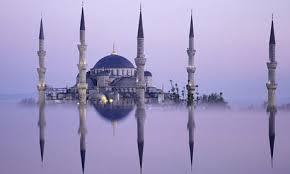
See full size imageIn 2003, we stayed in the Imperial quarter of the city, in a cheap hotel overflowing with Iranians and Russians. This year it was in some back streets nearer the Hagai Sophia, more in the heart of Istanbul. It was the haunt of Dutch and Germans. Friends of ours, who we met up with for a Turkish kebab meal were able to show us the ideal location - a cheap comfortable hotel with views of the Haggai Sophia and the Blue Mosque from the bedroom window -stunning lit up at night.
See full size image


ANGLICAN DIOCESE 

‘English congregations and churches have been established on the European mainland since before the Reformation. The number of these grew to such an extent that they were grouped from 1633 under the Episcopal care of the bishop of London, and later through a specially commissioned bishop. During the subsequent 200 and more years Anglican diocese were founded in many parts of the world. Among them, from 1842 the diocese of Gibraltar placed under the care of a bishop Anglican congregations in territories bordering he Mediterranean and other parts of south-west Europe. Northern and central mainland Europe remained under the care of the bishop of London. In July 1980 a single diocese was formed from the two areas. The Diocese in Europe is present in 42 countries with around 250 chaplainries and congregations and forms part of the Province of Canterbury’ 

from Diocese in Europe Concise Directory of Chaplaincies 2001-2002

Friday, October 19, 2001

Journey into Cyprus October 1999


Journey into Cyprus

Cyprus republic and third largest Island in the Mediterranean Sea. (225 km long and 97 km wide: an area of 9251 sq.km). Greek speaking 
Cyprus makes up about 80% of the population. About 18% is of Turkish extraction, and the remainder is made up of Armenian and other ethnic groups.

Both the Greeks and the Turkish communities retain the customs and to a great extent the national identities of their co-religionists on the mainland. Since the Turkish invasion of 1974, mass migrations of Greeks and Turks have taken place, so that now the two groups are geographically separated. The Greeks occupy the southern two-thirds of the island and the Turkish Cypriots occupy the Northern third.

The people are predominantly farmers who work the land surrounding their villages. Members of the Greek community adhere to the Church of Cyprus, which is in doctrinal agreement with the Eastern Orthodox church, but is independent and has no allegiance to any patriarch. The Archbishop Primate, who is Bishop of Nicosia and the three other Bishops of the Cypriot church are elected by the church membership. The Turkish minority is mostly Muslim. Other small religious groups include Maronites (Christian Arabs), Roman Catholics and Jews.
Cyprus’ Microsoft Encarta

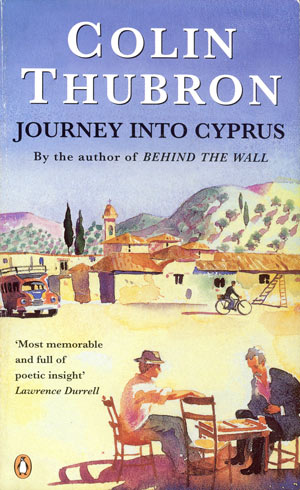
I was travelling to Aphrodite’s Island for the third, maybe even the  fourth time. At the time, I was reading Colin Thurbron’s ‘Journey into Cyprus’, detailing his 600 miles trek on foot around Cyprus in the last year of the island’s peace. It’s a book rich in succinct insights. He explains how, since his journey, the two parts of the island have been stamped with their own personalities:‘The north has fallen into neglect, the south into over-exploitation.’
He also offers a helpful explanation for the religious mixtures that abound:
‘Dig up a saint and you uncover a god!’
In Cyprus, religion seems to be as layered as its history.
‘All over the Levant, the ruins of Aphrodite’s temples are betrayed by trees hung with the clothing of diseased petitioners, by candles and figurines which are offered to ‘the Lady’. In uninterrupted worship, Aphrodite has become the Virgin Mary. The temple itself falls, the deity remains’.

This is folk religion at its most basic - so apparent and endemic in the region. I visited an orthodox church in Lefkara, a village famous for its lace: ‘Lefkaritika’. I wasn’t so much interested in the lace, more the legends. 


This was an ordinary village church, with its grotto of saints and icons. Among the candles and coins were wax limbs – arms, heads, legs - representative body parts. ‘For the icons effect cures’, explains Thubron.
‘Conceived in a time when medicine could do little, they had to cope single-handed with the fears and sicknesses of the Christian world. Cyprus alone is filled with these immemorial doctors whose bedside manner is one of numinous and infallible strength. They nestle propitiously behind spinneys of candles and drip with ex-votos: silver arms, legs, ears, eyes, hordes of coins and necklaces, wax statuettes. They cater for even trivial ailments. St. Yennadios of Mononero, who was frozen to death by the Cypriot winter, can cure the common cold; St Antipas soothes tooth-ache; St. Procopius will banish boils; and the lion-riding St. Mamas at Troulli, as well as dealing with tax matters, will relieve sore throats’


It seemed to me that in this Region where churches and mosques, priests and mullahs almost look identical, there is much room for authentic religion, which answers people deep needs for health, hope and healing.

From your own correspondent
October 1999