
Istanbul is the only city in the world that stands astride two continents. The main part of the city, which forms the south-easternmost extremity of Europe, is separated from its suburbs in Asia by the Bosphorus, which flows through a deep cleft that separates the two continents in the north-western corner of Turkey. The European part of the city is further divided by the golden Horn, a scimitar-shaped estuary fed at its upper end by two streams known as the Sweet Waters of Europe, the Greek Cydaros and Barbyzes… The Horn divides the European side of the city into two parts, with the medieval port quarter of Galata on the north and on the south the ancient imperial capital itself, the old city that some prefer to call Stamboul, though for Greeks it will always be Constantinopolis or in English Constantinople.
John Freely ‘Istanbul: The Imperial City’ (Viking, 1996) pg 3-4
This is indeed as John Freely describes it,
‘the Imperial City, the capital in turn of two world empires over a period of nearly 16 centuries’. Monuments and ruins of Byzantine and Ottoman empires crown the hills on either side of the strait. ‘stin polis’ in Greek means ‘in the city’ or ‘to the city’ - needing no other name to identify it, for this is truly The City beyond compare’
John Freely op cit pg315
Now midway through the twenty-seventh century of its tumultuous existence, the City has survived sieges, sacks, conquests, civil wars, riots, plagues, fires, earthquakes, and modern construction projects; retaining its identity through successive changes of name, population, language, religion and political status; occupied in turn by Greeks, Macedonians, Romans, Byzantines, crusaders, Byzantines again and then Turks, followed by the Allied nations of Europe, with large minorities of Latins, Armenians, Jews, Arabs, Bulgars, Macedonians, Albanians, Russians and other ethnic groups during various eras of its history; its essential character and spirit enduring through the ages, almost as if it had an immortal soul.
As Petrus Gyllius noted more than four centuries ago, when he set out to describe the topography of the imperial city on the Bospherus,

‘It seems to me that while other cities are mortal, this one will endure as long as there are men on earth.’
In 2002, travelling through with a colleague Mark, we had visited Rev Ian Sherwood and Christ Church, known as the ‘Crimea Church’ on the Asian side. He is part of the Diocese of Europe The Church of England has been quicker adopting Turkey than the European Union.
 In 2003, we stayed in the Imperial quarter of the city, in a cheap hotel overflowing with Iranians and Russians. This year it was in some back streets nearer the Hagai Sophia, more in the heart of Istanbul. It was the haunt of Dutch and Germans. Friends of ours, who we met up with for a Turkish kebab meal were able to show us the ideal location - a cheap comfortable hotel with views of the Haggai Sophia and the Blue Mosque from the bedroom window -stunning lit up at night.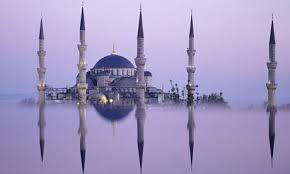
ANGLICAN DIOCESE
‘English congregations and churches have been established on the European mainland since before the Reformation. The number of these grew to such an extent that they were grouped from 1633 under the Episcopal care of the bishop of London, and later through a specially commissioned bishop. During the subsequent 200 and more years Anglican diocese were founded in many parts of the world. Among them, from 1842 the diocese of Gibraltar placed under the care of a bishop Anglican congregations in territories bordering he Mediterranean and other parts of south-west Europe. Northern and central mainland Europe remained under the care of the bishop of London. In July 1980 a single diocese was formed from the two areas. The Diocese in Europe is present in 42 countries with around 250 chaplainries and congregations and forms part of the Province of Canterbury’
from Diocese in Europe Concise Directory of Chaplaincies 2001-2002


No comments:
Post a Comment