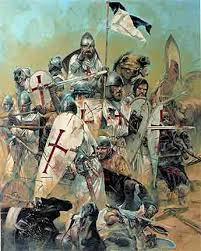
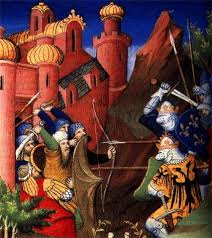

‘so much courage, so little honour’
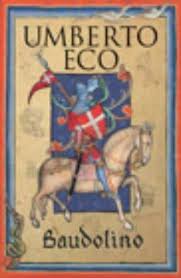
I have been reading around the Crusades as I have been travelling – they hold a fascination for me - Umberto Eco’s latest novel ‘Baudolino’ about the forth Crusade, under Barbarosa and the Frankish invasion of Constantinople (1204)
This weakened the city and contributed to its collapse and paved the way for the eventual Turkish / Selcuk takeover, under Sultan Mehmed II (the Conqueror) on 29 May 1453.

The determination of the westerners to conquer and colonise the lands of Byzantium was disastrous for the interests of Outremer. It was more disastrous still for western civilization. Constantinople was still the centre of the civilised Christian world. In the pages of Villehardouin we see reflected the impression that it made on the knights that had come from France and Italy to conquer it. They could not believe that so superb a city could exist on earth; it was of all cites the sovereign. Like most barbarian invaders, the men of the Fourth Crusade did not intend to destroy what they found. They meant to share it and dominate it. But their greed and their clumsiness led them to indulge in irreparable destruction….
Georges Tate ‘The Crusades & the Holy Land’ (1996,Thames&Hudson)
The Crusades that initially were meant to be all about liberating Jerusalem from Islam, in the complexity of the Middle East, became a pretext for the occupation of a ‘Christian’ city – Constantinople. It is a challenge that feeds into the current context, a sobering warning with Bush’s current ‘crusade’ against Terror, and those nations that harbour terrorists. Saddam Husein was seen by many Muslims as modern day Saladin. And Israel is perceived to be a crusader state. There is a real danger of polarisation, Crusade and Jihad. And a need for much wisdom and openness to dialogue.
The triumphs of the crusade were the triumphs of faith. But faith without wisdom is a dangerous thing. By the inexorable laws of history the whole world pays for the crimes and follies of each of its citizens. In the long sequence of interaction and fusion between Orient and Occident out of which our civilization has grown, the crusades were a tragic and destructive episode. The historian, as he gazes back across the centuries at their gallant story, must find his admiration overcast by sorrow at the witness that it bears to the limitations of human nature. There was so much courage and so little honour, so much devotion and so little understanding. High ideals were besmirched by cruelty and greed, enterprise and endurance by a blind and narrow self-righteousness; and the holy war itself was nothing more than a long act of intolerance in the name of God, which is the sin against the Holy Ghost’
Steven Runciman ‘A history of the Crusades’ vol 3 (1954)
Mission is also in the mind. It is about right attitudes as well as right action. But we need a ‘crucified mind, not a crusading, or coercive mind ‘ Mission is about ‘crossing boundaries, not crushing them.’ It is about serving, not sacrificing people.
Kosuke Koyama (1974) What makes a missionary ?
In the words of the protest song: ‘when will we ever learn, when will we ever learn?’
From your own correspondent
March 2004


The Royal Academy of Arts has an Exhibition running from 22nd Jan – 12th April 2005 called
Turks: a Journey of 1000 Years - 600-1600 AD
Turks: a Journey of 1000 Years - 600-1600 AD

