The Lost Message of Jesus

His emphasis on ‘original goodness’ rather than ‘original sin’, on orthodoxy and ortho-praxis together - His is an 'applied theology', not just an academic one, although he is well read.
The bone of contention is what has been academically termed ‘penal substitution’, which has become the dominant evangelical understanding for the cross. Chalke has termed it a form of ‘’cosmic child abuse’, which he claims is a popular accusation found in any pub discussion on Christianity. This is what has riled so many, causing accusations of heresy and withdrawal of support for his projects.
Karl Barth once accused British Christianity, with its emphasis on God’s creation, man’s freedom of choice and a practical faith, of being "incurably Pelagian”. I wondered if PELAGIUS 355-435 had had similar treatment as he was accused of heresy, by Augustine and others.
Steve Chalke
I attended what was jokingly referred to as ‘Chalke-gate’. Put on by the Evangelical Alliance at Emmanuel Evangelical Church in Marsham Street (London SW1), it was a “public debate on the issues raised by Steve Chalke’s controversial book, ‘The lost message of Jesus’ ”
I attended what was jokingly referred to as ‘Chalke-gate’. Put on by the Evangelical Alliance at Emmanuel Evangelical Church in Marsham Street (London SW1), it was a “public debate on the issues raised by Steve Chalke’s controversial book, ‘The lost message of Jesus’ ”
Joel Edwards; chairs the Evangelical Alliance (EA) and like me is an ex-Probation Officer. He set some helpful ground rules for the evening, as he called for ‘robust love; truth and grace’. The format was simple enough (if somewhat lengthy). Opening statements from each side, Steve Chalke vs. Simon Gatherall with responses and then further statements from 2 other guest speakers: Stuart Murray Williams vs. Anna Robbins. A break and then questions from Joe Public, closing statements, conclusion and prayer. It was chaired by Derek Tidball of LBC Steve Chalke is the founder of the charity Oasis and a popular broadcaster. He is able to communicate with passion and conviction. His theology is forged in everyday encounters with people on the margins. He is a practitioner who gets his hands dirty and has to find answers to the man in the street who questions the very roots and foundations of our faith.
His emphasis on ‘original goodness’ rather than ‘original sin’, on orthodoxy and ortho-praxis together - His is an 'applied theology', not just an academic one, although he is well read.
The bone of contention is what has been academically termed ‘penal substitution’, which has become the dominant evangelical understanding for the cross. Chalke has termed it a form of ‘’cosmic child abuse’, which he claims is a popular accusation found in any pub discussion on Christianity. This is what has riled so many, causing accusations of heresy and withdrawal of support for his projects.
Karl Barth once accused British Christianity, with its emphasis on God’s creation, man’s freedom of choice and a practical faith, of being "incurably Pelagian”. I wondered if PELAGIUS 355-435 had had similar treatment as he was accused of heresy, by Augustine and others.
Stuart Murray Williams, author of ‘Post-Christendom’, and a Mennonite, summarised part of his book. Christians were initially a powerless deviant minority, a counter-cultural community, which concentrated on the incarnation and living out the message of Jesus. Post-Constantine the Church became the centre of power, ‘Christendom’. It became violent, coercive, more doctrinal (cf. ecumenical creeds), and the emphasis became ‘the birth to death of Christ with nothing in between’. Christ's life had become disturbing, pushed to the margins by the empire. The radical message of Jesus was lost 400 AD and needs to be recovered. Amen to that!
(Stuart Murray William’s statement)
I was left with a question. Does an emphasis on ‘penal substitution’ lead to an evangelical jugmentalism? This has been evident in a lot of what has been written in the Christian press, as well as some of the comments in the hall. A form of graceless Christianity.
(Stuart Murray William’s statement)
I was left with a question. Does an emphasis on ‘penal substitution’ lead to an evangelical jugmentalism? This has been evident in a lot of what has been written in the Christian press, as well as some of the comments in the hall. A form of graceless Christianity.
Steve was awarded an MBE for ‘services to social inclusion’ His theology also seems more socially inclusive than most.
I noticed two scripture texts above the stage:
Maybe God was trying to tell us something.
I noticed two scripture texts above the stage:
John 10:10 ‘I have come that they may have life’
Matt 1: 23 ‘Emmanuel, God with us’.
Maybe God was trying to tell us something.


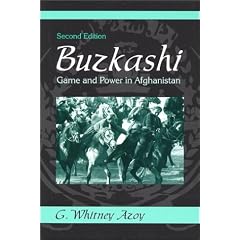 G Whitney Azoy, a US foreign service information officer in the 1970s, studied the game and eventually his PhD was published ‘Buzkashi: Game and Power in Afghanistan’ (Univ of Pensylvania, 1982). His is one of the best descriptions:





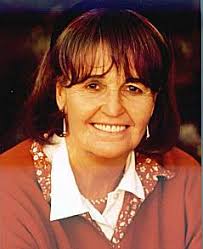 I was able to attend the Graduation at the end of my visit - a moving affair, opened by children of New Beginnings School singing the National anthem. Kazak and Kyrgyz dancers also preceded the presentations of graduation certificates to various groups. The women’s rehab, refuge and workers. Boy’s and Men’s rehab and workers. TEFL teachers. And more Kazak songs - around 90 people receiving certificates Presided over by Doug with Baroness Cox as the chief guest, brought by Sam, an Iranian from Surrey. She was in Kazakhstan to make representation on behalf of Teen challenge to the President wife and the Mayor of Almaty concerning 3 buildings. Teen Challenge was fighting a court case over the 3 buildings.


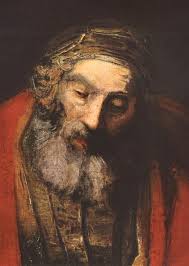
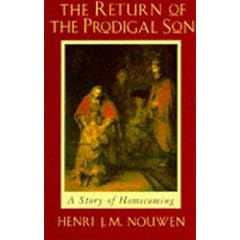
 The father has prominent hands: Neuwen suggests a strong male left and softer female right, resting on the sons back, capturing the androgyny of God. The bare head and calloused foot of the son, clothes, torn and filthy, suggest hardship and exposure. The rich red cloth on the fathers shoulders, paralleled by the elder son on the right, suggest opulence. This is reinforced by the size of the painting, maybe 10’ x 6’, in its rich gold frame. Groups stop, English, Japanese, Russian, Italian, German and spend a few minutes, with commentary from their respective guide - and then they move on. There are lots of other paintings to see. Individuals sit and read the explanation and contemplate.