Monday, December 15, 2003

The Cross of Nails Sibui Romania


The Cross of Nails

Father make us one.
Don’t make ‘them’ like ‘us’,
Don’t make ‘us’ like ‘them’,
But make us all more like You.
The Cisnadioara Prayer© Steven Hughes 1994


Geoff and Gill Kimber have a ministry of reconciliation. As CMS mission partners, they head up the ‘Cross of Nails’ reconciliation work in Sibiu. It is run in partnership with the project they were previously associated with, ‘Ascensium’ in Cisnadioara.

Timothy and I were in Romania to attend the opening. It was a joyous affair, celebrated sensitively with a simple liturgy.


Based in a 3 room flat in the centre of the city, ‘The Cross of Nails Centre’ has a small library and reading room, for teaching English, meetings, and discussion groups.

One of the most encouraging aspects is the Orthodox Youth movement ‘Corpus Christi’, a lively group who use the rooms as their base. Many of them come from the local Seminary.
There is another group based there as well. ‘Darul Vietii’, literally ‘the gift of life’. This small group of Romanian social workers, psychologists, and medics have formed a pro-life group. Their aim is to establish an abortion education and counselling service the city of Sibiu and surrounding villages. They also educate about sexually transmitted diseases in a local hostel. Gill is supporting them as part of her diaconal ministry. They are also linked with ‘Primal Pas’ a similar CMS partner in Iasi (pronounced ‘yash’)

Geoff and Gill seek to establish relations with the Orthodox as well as the other denominations. They have good relations with the Lutheran bishop. But it is something of an ecumenical minefield. Making reconciliation all the more necessary.

Coventry Cathedral


I was also in Coventry the previous month for the CMS Conference. This is the home of the original Cross of Nails, birthed in the post war period, as Coventry sought ways of demonstrating reconciliation, particularly after its body but not its heart had been destroyed in the intensive bombing of WW2. The shell of the former cathedral stands as a moving memorial to this. In addition they started the Cross of Nails centre, which fosters various reconciliation groups around the world.


On the Saturday night of the conference we commemorated CMS’s world mission, starting at the ‘Freedom Tree’ in Sierra Leone, where many slaves were freed. As part of our celebrations, there was a wonderful carnival procession of butterflies, symbolising that freedom. The new creation found in Christ.


One of the most powerful moments was the simple song ‘God is so good’ sung in many languages, by people from many lands. It was real evidence of the ministry of reconciliation found in Christ, who breaks down the walls that divide and heals the enmity between people and nations.


Not so much Mohammad Ali, the world champion boxer’s motto: ‘Float like a butterfly: sting like a bee’ but maybe a motto for the kingdom: ‘float like a butterfly: sing in harmony!


From your own correspondent
Sibiu Romania (and  Coventry England) 
Dec 2003 (Nov 2003) 

Saturday, November 29, 2003

To live and to die for - Kabul - Nov 2003

See full size imageSee full size image
See full size image
See full size image


We did a project visit and it was great to see the chowkidar (watchman) from my old Office in Peshawar - He had been a medical student then and was doing night shifts to support his study. Now some 5 years later he is a doctor and running a basic health clinic and a small hospital for women and children in Kabul. It is very impressive work and he has a lovely 'spirit' to him.


I was told about Pul-e-Charki, the last main check post on the road from Jelalabad, before you get to Kabul. The same NGO has run a basic medical clinic there for years, all during the fighting. Apparently Coalition forces were doing live target practice on a range there and 4 children, who strayed onto the range, were accidentally killed. Both the community and the military were devastated and they offered to make amends in some way. After discussion with community elders, it was agreed that they would build a small kindergarten and a secondary school, plus a medical clinic for the community. They kept their word.

The community then insisted that this same NGO run the clinic since they were the only ones who had demonstrated any commitment to them over the past few years. It is being opened as a mother and child clinic.

So it was both a vote of confidence from the community and an example of hope thriving in the midst of despair - of good coming out of awful and evil situations.

See full size image
I haven't seen many UK International Security Assistance Force (ISAF) troops here so far. At present Canada is taking the lead but I did meet some of the Finnish troops. They were amazed to meet a Finnish lady who has been here 26 years working with an NGO. Her commitment impressed them no end. She was taking us on a brief 'tour' to the British Cemetery. It had been tidied up for Remembrance Sunday last week  and was looking very neat and green, especially after the rain.

I saw the grave of the Dutch/Finnish couple who had been murdered about 20 years ago resulting of the withdrawal of the whole NGO team in protest. There were other expats:   a Danish explorer, a British pilot; Czech, Polish, German, an Italian cyclist who had died in Kandahar  - There were also hippies, who had been in the ‘Dilaram House’ run by Floyd McClung in the 1970s. It was more of an International 'Christian' cemetery, than a British one and well reflected the international expatriate community in Kabul.
There was also one wall with gravestones from British troops, who had died during the second Afghan War in the 1870's – recently restored by current UK troops on duty in Afghanistan. And the opposite wall had memorial plaques to the troops of ISAF,  who had died as peacekeepers over the past 2 years. Including the Spanish troops whose plane crashed and the Germans, whose helicopter had been brought down, as they were leaving the country, on their way ‘home’ after a tour of peace-keeping duty.
 
It certainly makes you think - about people’s lives and what they stand for! And also what we live for and what are we prepared to die for?  


From your own correspondent

Kabul November 2003

Disaster Preparedness: Kabul Nov 2003


News From No Man's Land

Your correspondent here writing from Kabul, the city liberated by that other 'Simpson' - John Simpson of the BBC. No relation unfortunately.


On Monday I visited north of Kabul - the area called Shamali - it was the area where the Taliban had practiced their scorched earth policy and where many villagers were killed. We drove an hour or so in the back of a sturdy Landover.

It was good to see local people have returned and are starting to rebuild their lives - It had snowed the night before so it looked stunningly beautiful. We were in a village at 3,300 metres (started at around 1700 so a bit of a romp - nice to get out in to the open air, clean and fresh). Our local partner has been running a disaster preparedness programme, which includes teaching about earthquakes and flooding terrorism, war and how to survive. In addition there is a more basic programme of disease prevention through building simple toilet constructions - they provide some material (£50s worth) and the villages construct them. Good co-operation.


The villagers were very friendly and pleased to see us. It was Ramazan, but they wanted to give tea - which we declined, but they insisted we took an apple each for the journey. Wonderful hospitality from people so poor.


On the way we saw a mine at the side of the road, a foot or so from the wheel of the Landover, we took photos and took a reading on the GPS (Global Placement Satellite) and decided that on the way back we would mark the spot with stones and let de-mining know. So as we were returning a villager with us, bent down said 'that's not a mine and nonchalantly picked it up and threw it away!!' It was casing of some kind from a shell, but looked very authentic buried in the ground. It caused a bit of a laugh anyway.


There was a nasty shooting incident in Ghazni - a UN French lady shot and killed - just 29 years old and much respected locally. Apparently over 1000 vehicles followed the vehicle carrying the body back to Kabul as a sign of respect for the work of the International Community and disgust at the brutal killing - in Pushtoon culture, you DO NOT kill women - It is very much against ‘Puktoonwali’ - the cultural value system).


The UN are pulling out of the south, but continuing their work overall. It is yet another 'security incident' here in a yet unstable but ever hopeful Afghanistan.


From your own correspondent
November 2003

Monday, November 24, 2003

Hope Journeys Kabul Nov 2003


Mar Jan left Afghanistan for Iran to make enough money to marry. In Iran he became a heroin addict so he couldn't return to Afghanistan. Instead he went to Peshawar in Pakistan. ‘I was useless. I had dirty shoes, dirty clothes, and no one would let me into their home. I slept under a bridge for eight years and would eat thrown away food. Once I was accused of stealing and a policeman beat me on my head with his gun…There was no place for me to go… and no-one to help me except God….’

NEJAT  (a Persian, Pushtu & Urdu word meaning freedom, salvation, deliverance) started work in 1991. In Hayyatabad, Peshawar it provided a 20 bed facility for harm-reduction, detoxification and rehabilitation.
‘With a waiting list of over 3000, the centre provides residential care for 240 addicts each year, through its 3 stages of Reception - 2 months of preparation aimed at self motivation and harm reduction, Residential - 4 weeks detoxification, counselling and education, and Re-integration - one year follow up including job placement support’
ORA Annual Report 1999 ‘Hope Journeys’

This is the programme I used to work with as Drug Advisor, helping with the staff training and development programme.
The work expanded in four districts of remote Badakhshan, NE Afghanistan - Sheghnan, Ishkashem, Zebak and Wakhan. I was always impressed with the dedication of the Afghan staff, who walked overland to the centres for a fortnight and then spent a year in primitive conditions, often in extreme cold, dedicated to serving their people. When we went we drove 4 wheel-drives for 2 days to get there. A journey I will never forget. Refugee camp based detoxification programmes – in Khorasan, Jalozai and Akora Khattak - were also set up for women and children unable to attend a residential establishment. I remember visiting Uzbeks families who were re-establishing carpet weaving to break out of the poverty trap of addiction.
Over 10 years NEJAT treated around 9000 addicts including women and children, (c 4000 beneficiaries in Pakistan and c 5000 in Afghanistan). The work of the Nejat Centre Peshawar (1991-96) was externally evaluated and the report ‘Nejat the first 5 years’ suggests an impressive 2/3-success rate (66%) -very high in this field.


The NEJAT director on horse-back in remote Afghanistan


Qasim, the Director, is an ex Mujahhadin commander who fought against the Russians and is now fighting a war on Drugs. He has doggedly lead and built up a team of Afghans who are helping their own people tackle this debilitating problem. With increasing funding problems the programme has been run more and more on a voluntary basis. As I look back I am struck by the overwhelming needs, extremes conditions, high staff commitment, which contribute to the uniqueness of the project. They are helping to create civil society through the various tribal groups co-operating in the programme- Pathans, Tajiks, Uzbeks, Hazaras, Afghans and Pakistanis together. No mean achievement in an increasingly fragmented society.

Now the work has shifted to Kabul and the other centres closed down. It is a new phase. It almost feels like the old has died and they are starting all over again. But Nejat continued to make a significant contribution to rebuilding lives and thus rebuilding Afghanistan. Hope journeys on.

******
Mar Jan was helped by NEJAT workers who met him under the bridge and invited him to become a friend (‘dost’): ‘I couldn’t believe it, how could they be friends with someone like me. The smell from my head wound was so bad that no one could be around me. I went with my new friends and they made me have a bath, they dressed my head wound and cleaned out the lice, and I was admitted into their rehabilitation centre…. Now I am well and my head injury is completely healed. I am working as a volunteer at the NEJAT centre. My previous drug user friends do not even recognize me. They think that Mar Jan died'

from your own correspondence

NEJAT, Kabul, Nov 2003
(and Peshawar 1996-98)


A recent Times article on Nejat can be found on the BBC website

Afghanistan's home-grown drug problem
The BBC's Andrew North   By Andrew North BBC correspondent in Kabu

Wednesday, November 19, 2003

Let go and Let God Islamabad Nov 2003


Let Go and Let God

I travelled to Islamabad on Thursday and had 24 hours with our CMS people there. Carol and Roger work with ICAN (Islamabad Christians Against Narcotics) and Nigel and Joan are good down to earth Yorkshire folk (he was an ambulance chief). They have just arrived and are starting language study. They will be going to Quetta Mission Hospital - mispronounced locally as Machine Hospital ! where he will be administrator and she will initially teach English to medical staff.

See full size image

We visited ICAN and I enjoyed talking to addicts again. It made me feel at home and took me back to our Ibtida years in Karachi (1986-1996) – In fact IBTIDA originally helped ‘birth’ ICAN at the invitation of a CMS MP at the time Rev Graham Burton, who was vicar of St Thomas’s Islamabad.

The programme is struggling with funding, but has just managed to get an interim contract, where they do a 10-day detox for another programme - Nai Zindegi (New Life). It’s not ideal but it keeps them going. Aamir’s vision is to re-establish themselves as a Christian Drug Rehab, offering spiritual treatment based on the 12-step programme. CMS has been supporting the project through an annual grant, and personnel who can help with staff training. Aamir attended the ISAACS training programme at the Freedom Centre in Wadi Natroun, Egypt and this has encouraged his vision to ‘let go and let God’

He is a part of the ISAAC drug network and also chairman of the Pakistani Drug and Aids Workers Network (DAWN) We met most recently at the ISAAC training conference in Spain in May.


St Thomas's Church is ICAN’s spiritual base, as well as home church to a Pakistani working in Kabul. Shakeel is helping to capacity build and train the personnel there, both expat and Afghan. He is a very gentle guy and really good for this International NGO. He is their first Pakistani team member, having worked previously for another partner organisation in Pakistan - DOER Trust. DOER stands for the development of existing resources. Exactly what Shakeel is good at.

Unfortunately Rev Irfan Jamil, the new vicar of St Thomas’s (and possibly the best scrabble player in Pakistan!) was in Lahore, so we could not meet up.
See full size image


There's never enough time when I visit Pakistan and I always get in trouble for not meeting some people.


From your own correspondent

Islamabad
Nov 2003

Thursday, October 30, 2003

On pyramids October 2003


Police Camel 


Considered one of the Seven Wonders of the World the great Pyramids of Giza are possibly the most visited monuments of Egypt… The pyramids of Sheops and Chephren have stood for 46 centuries … before them lies the Sphinx .. mystery surrounds the meaning of this feline character.
lonely planet guide


‘It was not an obsession with death, or a fear of it, on the part of the ancient Egyptians that led to the construction of these incredible mausoleums , it was their belief in the eternal life and their desire to be at one with the cosmos.’
lonely planet guide


I finally made it to the Pyramids, on this my 3rd trip to Egypt. I was travelling with Leslie, a CMS colleague (Interchange advisor). We were on our way to youth conference in Pakistan via Egypt and were given an afternoon off from the ISAACS programme to explore Egypt’s heritage.


On close examination I managed to work out that pyramids have four sides, not three!  This helped me expand my definition of mission. I had often described it as a triangle, but now there were further possibilities !


They are after all full of religious meaning, so lend themselves to spiritual analogies.


At the Pakistani Youth Peace Conference in Karachi I was able to share these new insights into the work of CMS as “A movement of people in mission”.

Mission is like a pyramid with different sides: 
The 3 bits I have often emphasised in the past are: 
Proclamation, kerygma, speaking the Word of God 
Praxis, diakonia doing the Works of God 
Presence koinonia being a Witness as the People of God 
 And I suppose I have tried to live out the middle of these three through my own involvement in social development.  But I recognise how important being an authentic witness is through simply being who we are and also the necessity of being willing to answer peoples questions, which involves speaking  about what we believe in.  

But there is a hidden dimension to this pyramid -  which represent dealing with issues of Power and (Spiritual) Warfare, fighting evil structures, not people.

And I would put Praise & Worship of God is at the heart of the pyramid, at the centre of it all. 

And I suppose you could say that the the pinnacle of the Pyramid, the outworking, is the Way of Peace and Discipleship, the lifestyle of the follower of Jesus, the Prince of Peace.


from your own correspondent 
Cairo October  2003

Freedom is coming Wadi Natroun, Egypt October 2003

See full size image
I arrived at length at Cairo, mother of cities and seat of pharaoh the tyrant, boundless in multitude of buildings , peerless in beauty and splendour, the meeting place of comer and goer, the halting place of feeble and mighty whose throngs surge as waves of the sea
Ibn Battuta 

See full size image

All but 4% of Egypt is desert and the remaining land that is largely fertilised by the Nile, is overcrowded with a population of 63 million. Bedouin, Orthodox, Arab, Turkic, Nubian, spiced with Greek, Armenian, Jewish, Kurdish and Albanian. The cheapest commodity is labour.  


See full size image
94% are Sunni Muslim. But there is a large Christian community of some 5-7million Copts with other minority religious groups: Protestants, Roman Catholics and Greek Orthodox, as well as Jews and Shia Muslims.  


See full size image
Cairo, a city of 17million, is one of the world’s Mega Cities. The illiteracy rate is high (over 50%, over 10 years old); poverty is widespread and the typical diet is inadequate. Yet it is safe to walk the streets, violent crime is uncommon. But a sense of humour is most vital in this bureaucratic country of hard bargainers. 


See full size image
Drug statistics are hard to come by. 'Narcotics rife on University Campuses', according to the Egyptian Gazette (Sun Oct 1). Marijuana in its various forms notably Bhang (a sort of hemp tea) is used in Cairo, Helwan and in Shams Universities. The Police Museum in the Citadel has mounds of confiscated narcotics.


See full size image
One of the most common sights is the ‘sheesha’, a turkish hookah, with mixtures of apple and honey sweetened tobacco being sucked through a tube that runs through a water filter (hubble bubble). 


FREEDOM CENTRE 


Freedom, oh Freedom Freedom is coming 
oh Yes it is Freedom is coming

Halfway along the road from Cairo to Alexandria is Wadi Natroun, site of the Freedom Centre, This is where they take many of Egypt’s addicts. Run by Dr Ehab el Kharrat, MD, PhD (CMS part supported his studies at Cantab.). He describes himself as ‘Ehab the Arab in Rehab’

I was visiting the centre to teach on the 5 weeks ISAACS addictions counselling course.
CMS supported a Russian speaking Nigerian Doctor working in Tajikistan to attend the course. He has shared how the course has multiplied experience and knowledge and output. People have started their own centres as a result of the training.

I was only there for 3 days doing 2 workshops on the Rehabilitation Process and using Appreciative Enquiry in Project planning. Ours was a mixed group, including Julian & Shaheen from Pakistan and Vladimir from Kiev all supported by CMS. Others came form Kenya, Nigeria, S Africa, Egypt Switzerland, Philippines and UK. They were all on the course to help set up their own programmes in their own countries.


From your own correspondent
October 2003

Thursday, March 27, 2003

Istanbul – THE CITY March 2003

Istanbul – THE CITY


Istanbul is the only city in the world that stands astride two continents. The main part of the city, which forms the south-easternmost extremity of Europe, is separated from its suburbs in Asia by the Bosphorus, which flows through a deep cleft that separates the two continents in the north-western corner of Turkey. The European part of the city is further divided by the golden Horn, a scimitar-shaped estuary fed at its upper end by two streams known as the Sweet Waters of Europe, the Greek Cydaros and Barbyzes… The Horn divides the European side of the city into two parts, with the medieval port quarter of Galata on the north and on the south the ancient imperial capital itself, the old city that some prefer to call Stamboul, though for Greeks it will always be Constantinopolis or in English Constantinople.
John Freely ‘Istanbul: The Imperial City’ (Viking, 1996) pg 3-4


This is indeed as John Freely describes it,
‘the Imperial City, the capital in turn of two world empires over a period of nearly 16 centuries’. Monuments and ruins of Byzantine and Ottoman empires crown the hills on either side of the strait. ‘stin polis’ in Greek means ‘in the city’ or ‘to the city’ - needing no other name to identify it, for this is truly The City beyond compare’
John Freely op cit pg315

Now midway through the twenty-seventh century of its tumultuous existence, the City has survived sieges, sacks, conquests, civil wars, riots, plagues, fires, earthquakes, and modern construction projects; retaining its identity through successive changes of name, population, language, religion and political status; occupied in turn by Greeks, Macedonians, Romans, Byzantines, crusaders, Byzantines again and then Turks, followed by the Allied nations of Europe, with large minorities of Latins, Armenians, Jews, Arabs, Bulgars, Macedonians, Albanians, Russians and other ethnic groups during various eras of its history; its essential character and spirit enduring through the ages, almost as if it had an immortal soul. 

As Petrus Gyllius noted more than four centuries ago, when he set out to describe the topography of the imperial city on the Bospherus,
‘It seems to me that while other cities are mortal, this one will endure as long as there are men on earth.’


See full size image
In 2002, travelling through with a colleague Mark, we had visited Rev Ian Sherwood and Christ Church, known as the ‘Crimea Church’ on the Asian side. He is part of the Diocese of Europe The Church of England has been quicker adopting Turkey than the European Union.


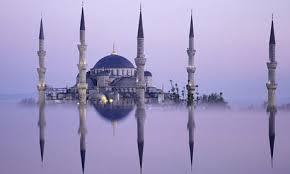
See full size imageIn 2003, we stayed in the Imperial quarter of the city, in a cheap hotel overflowing with Iranians and Russians. This year it was in some back streets nearer the Hagai Sophia, more in the heart of Istanbul. It was the haunt of Dutch and Germans. Friends of ours, who we met up with for a Turkish kebab meal were able to show us the ideal location - a cheap comfortable hotel with views of the Haggai Sophia and the Blue Mosque from the bedroom window -stunning lit up at night.
See full size image


ANGLICAN DIOCESE 

‘English congregations and churches have been established on the European mainland since before the Reformation. The number of these grew to such an extent that they were grouped from 1633 under the Episcopal care of the bishop of London, and later through a specially commissioned bishop. During the subsequent 200 and more years Anglican diocese were founded in many parts of the world. Among them, from 1842 the diocese of Gibraltar placed under the care of a bishop Anglican congregations in territories bordering he Mediterranean and other parts of south-west Europe. Northern and central mainland Europe remained under the care of the bishop of London. In July 1980 a single diocese was formed from the two areas. The Diocese in Europe is present in 42 countries with around 250 chaplainries and congregations and forms part of the Province of Canterbury’ 

from Diocese in Europe Concise Directory of Chaplaincies 2001-2002

Friday, February 28, 2003

My trip to CYPRUS by Joanna (aged nearly 9) February 2003


This is a ‘from your own correspondent’ story with a difference: written by my daughter Joanna as she accompanied me on the PiM conference. Much more interesting than my report!


 'People-in-Mission'

I went with my Dad for a week to Cyprus for a CMS conference. There were lots of people there from Egypt, Pakistan, Turkey, Lebanon, Syria, Jordan and Cyprus. They all work with CMS in the Middle East and are called ‘People-in-Mission.’ The conference was called the ‘Big Picture’. My old teacher - Miss Rowe’s aunt, Elizabeth, was also there from Salt in Jordan where she works with deaf people.

See full size image

We stayed at the Lordos Beach Hotel, next to the Mediterranean Sea. There was a small indoor swimming pool but we weren’t allowed to go in the big outdoor one, because it is only used after April when it gets warm.


During the day the adults had boring meetings and the children had a good time. Except one day we had to go and visit an American School – Grade one class ! They were learning the letter ‘G’!!!

See full size image

We went to visit Nicosia, the capital of Cyprus. It has a Green Line, which divides the city. In the north are the Turkish and in the south the Greeks. We went up a Tower and saw the whole of the city from there. We also did some shopping and had a Greek meal in a Restaurant.


See full size image
In Larnaca, we visited the Church where Lazarus was buried in, the second time he died. The first time is in the Bible (John chapter 11) but Jesus raised him from the dead. And he later escaped to Cyprus where he was the first Bishop. Later they took his bones to another place (Istanbul), so he had three tombs!

It was nice going on an aeroplane, again, except there no movies or games (if we went on Emirates they have Games and Videos, but we went with BA – Blooming Awful /Boring Airways) so it was a bit boring and long. The view of London at night, just before we landed, was amazing.


Tuesday, September 17, 2002

Teen Challenge Kazakstan Almaty Sept 2002


Teen Challenge Kazakhstan (TCK)

Everything you have seen here has been built by God. When Jesus went to Jerusalem the crowd shouted Hosanna and the donkey thought ‘they really love me here’. I now realise ' I'm the donkey'. 
Doug, TCK Director

In my office, I have many invitations from students. It is exciting to see invitations sent by students for marriage. What is success percentage? It doesn’t matter! If just 1% success it is enough. Human life has no price. This is not just our work, but it is for the whole of Kazakhstan. Go to real lives and make leaders good quality. People who did not desire to go to school; they will go to university and get good profession. Our children will continue this work. When I think like this I cannot sleep'
Chanzi, Treasurer


TCK is first and foremost a spiritual work. It has grown out of the Teen Challenge movement started by David Wilkinson and developed internationally. TCK is an independent organisation, registered as a Humanitarian Fund in Kazakhstan

Doug described the general philosophy in terms of humility, obedience (respect) and Holiness. James 1:21 ‘in humility receive the word implanted which is able to save your soul’. Like many other Christian Drug programmes, TCK is founded on the Jesus’ Nazareth Manifesto (Luke 4:18-20). Setting the oppressed and captives free (Is 61:1) who are called: ‘Oaks of righteousness, the planting of the Lord (61: 3). But unlike many other rehabs TCK goes on to do the rest - ‘rebuild ancient ruins…. raise up former devastation… repair ruined cities’ (61:4) and ‘strangers will pastor …. and foreigners will be farmers’ (61:5); they will be ‘called priest of the Lord, Ministers of our God’ (61: 6) It is all there in TCK: Detox & Rehabilitation, counselling and discipleship, building and renovation work, foreign leadership, and church mission and ministry.

Doug shared a dream of steering a big ship. He had tried to avoid rocks and beached the ship. Later whilst driving the interpretation hit him - a revelation from God. ‘I have given you a ministry; your job is to steer it. You can’t control its size; you can’t avoid problems, just keep on course. The ship can go over rocks, so don’t avoid them.’ He added that on the beach when he looked up ‘it was a huge container ship some 9 stories high’


TCK has seen remarkable growth! It has grown exponentially over the past few years, so that now there are 9 different programmes serving some 200 recovering addicts. Men, Women and Children, Detox, Rehab and Vocational training, prison ministry, awareness a sports club and other prevention activities And even a School. In all there appear to be roughly 2000 direct beneficiaries and 150 staff. This growth is due to the political and economic environment in Kazakhstan, as well as the vision and drive of Doug and staff. And of course the ‘hand of God’.

It is well respected as the oldest Therapeutic Community (TC) in Kazakhstan. It is therefore positioned to exert great influence. Baroness Cox’s arrival was a great political coup d’etat in that it increased credibility, and demonstrated some political muscle. This appears to have had positive results so far.


I joined the programme in 1996 a drug addict for 15 years, thinking ‘what for am I living?’ One day, sister introduced me to programme. I felt so empty. I was told that in 1½ months, I would be free from drug addiction. I met others who said ‘we are free’. Trust God, trust us, you will change! God came into my heart. My life was empty and hopeless – useless, no joy. I felt I could never change, but now I am happy and have hope I have everything. I have found life and can see a future and have hope. I am so grateful to the programme, to these men.
 
Yerbo, Farm Manager 


I realized, through visiting, that TCK is not a subsidiary of TC-USA International, the MacDonalds of the Drug Rehab world. But TCK is much more autonomous. Although it does use the TC International materials, it is not dependent on the mother organisation. In fact is operating fairly independently. Not so much the MacDonald of the drug rehab world, more a Central Asian ‘Shashlik’


*******************

See full size imageI was able to attend the Graduation at the end of my visit - a moving affair, opened by children of New Beginnings School singing the National anthem. Kazak and Kyrgyz dancers also preceded the presentations of graduation certificates to various groups. The women’s rehab, refuge and workers. Boy’s and Men’s rehab and workers. TEFL teachers. And more Kazak songs - around 90 people receiving certificates Presided over by Doug with Baroness Cox as the chief guest, brought by Sam, an Iranian from Surrey. She was in Kazakhstan to make representation on behalf of Teen challenge to the President wife and the Mayor of Almaty concerning 3 buildings. Teen Challenge was fighting a court case over the 3 buildings.

Besides a Baroness, they were presented by a local councillor who has supported the programme, a member of the Drug Committee, The Assistant British Ambassador, a representative from British Council (for the TEFL). And I was representing CMS, Tearfund and ISSAC! Certificates were presented to all who were 2 years drug free and also staff who had been through an 18 months training course. It was the ‘piece de resistance’ and the support offered by Baroness Cox was very tangible and timely. Expressions of support have been made by the Kazakh government, for example for the orphans in the Beginnings School. The event was carefully orchestrated - but not ‘over the top’.

It was very helpful for me to get a fuller grasp of the extent of their programme and the high regard with which it is held. Local government was well represented by a man who genuinely supported and appreciated the work. (I spoke to him afterwards). 9 projects were presented - 9 parts of the overall programme in all I wondered if the 9 programmes corresponded to the ship ‘9 stories high’ in Doug’s vision.

I travelled back on KLM with Baroness Cox and Sam, not VIP, or business class, I was pleased to see, but economy class, full of normal, crowded humanity. Lord Longford called her a ‘Christian champion’. Andrew Boyd, in his biography, highlights
‘her concern for the oppressed, the repressed and the vulnerable – those least able to articulate their needs and their rights. Caroline Cox strives with a passion to be a voice for the voiceless, whether on the home front in the United Kingdom or abroad, speaking for the forgotten peoples in forgotten lands’.
See full size image
Andrew Boyd ‘Baroness Cox: a Voice for the Voiceless’ 
Lion 1998 Pg 435


Addicts, street-kids and battered women in Almaty now consider her such a voice, their very own Baroness. They also have a couple on the ground in Doug & Anna.


From your own correspondent

Amati Sept 2002

Tuesday, May 14, 2002

A sermon in cloth Sri Lanka May 2002

 A Sermon in cloth

Visit to Emmanuel Memorial Church Maradana, Colombo 10


As part of the ‘Called for Peace Youth Conference’, 3 of the cell groups were attending the 8:30 communion service in order to understand more the Sri Lankan context.

Built in 1912 by a CMS missionary, the Emmanuel Memorial Church has a membership of 110 families and a healthy Sunday morning congregation of 150, plus 50 children. They are Tamil speaking from mainly poor and middle class. This is the congregation of Rev Prince Devanandan who had been such a leading light in our Youth conference.

Bits of the service were translated for our sakes. It felt so familiar even through they were singing in Tamil. The liturgy was the same. A large colourful banner hung behind the pulpit depicting the 'Journey of Faith’. This was produced by the congregation to mark their 90 years of existence. There are 5 references on the banner, which sketch out the direction they want to take, leading to their centenary.
‘Doing the will of God’ (Phil 2: 13)
‘Guarding the faith’ (2 Tim 4:7)
‘Repairing & building relationships’ (Gen 32: 4 & 20)
‘Building up Kingdom of God through evangelising and social service (Act 13 2& 3 Matt 25 31-46)
‘Being persistent in serving others’ (Gal 6:9)
It is a good vision. A whole sermon on cloth

We are asked to bring greetings. I found myself apologising for the Anglican Church - so British in its architecture - and the legacy we had left behind. That forced them all in stiff pews that restrained their own cultural norms and enthusiasm. The people are so warm and friendly. , so Sri Lankan. The church building, so British.

The service finished with children coming for a blessing during the last hymn. They burst out of the pews, joyfully breaking out of all traditions. Rev Prince explained that children are a symbol of the kingdom and a sign of hope for ‘the children of today are the church of tomorrow’. ‘Yes and No’, I thought. They are an integral part of the church of TODAY not just tomorrow. They help us to stop being so adult, so religious. Thank God for children, who do not conform to religious stereotypes – ‘Forbid them not, for such is the kingdom of heaven’


The opening ceremony at the Called for Peace Youth Conference held in Sri Lanka


With their National flags on display, delegates from India and Pakistan pose to celebrate the treaty between the Christian Youth of their Nations. This was a spontaneous event in response to a million soldiers on their national borders, paused on the brink of war, They covenanted to pray and ‘build the bonds of peace’, no matter what happened between their churches and nations. Their overlapping flags are another sermon in cloth – a sermon about the one who breaks down national walls.


from your own correspondent

May 2002