Friday, September 17, 2004

The Metropolitan and the Mufti Aleppo Sept 2004


Christians are better off in Syria than anywhere else in the Middle East. Other than Lebanon, this is the only country in the region where a Christian can really feel the equal of a Muslim – and Lebanon of course has many other problems. In Syria there is no enmity between Christian and Muslim. If Syria were not here, we would be finished. Really. It is a place of sanctuary, a haven for all the Christians; for the Nestorians & Chaldeans driven out of Iraq, the Syrian Orthodox and the Armenians driven out of Turkey, even some Palestinian Christians driven out of the Holy Land by the Israelis. Talk to people here and you will find that what I say is true’

Mar Gregorios in Dalrymple’s book 
From the Holy Mountain (Flamingo 1998) page 150

When William Dalrymple, author of the ‘From the Holy Mountain’ met the Metropolitan he described him as a
‘small round figure’ who walked in backwards telephone in hand, talking animatedly ‘He turned a pirouette and advanced towards me his free hand extended. He finished his telephone call, snapped shut the phone with a flick of his thumb and popped it into his cassock pocket.’ He then showed him some architects plans and blueprints that were on a table.


The scene was almost exactly re-enacted for us. Archbishop Yohanna 
Ibrahim showed us plans for an old people’s home in the new Syrian quarter – on 7537 metres of land given by the government. The blue print had 4 floors of hospital and 2 floors of an old peoples’ home. ‘How can CMS help with the construction?’ was the implied question.

Christians are a sizable presence here. Christians are now around 5% of the population but at one point there were as many as 50%. There are 11 denominations: 6 of them Catholic and many churches. The Syrian Orthodox church is growing and rebuilding itself, even though many are still leaving for the West. ‘But Syria is still a place where a Christian can feel an equal citizen with a Muslim.’ the Archbishop assured us. 

Like so many in the region, the archbishop hospitably dropped everything to show us around his diocese. 

Our tour included 2 Schools, a Clinic, a Hospital and a Church.First a private co-ed school - Ben e Talub – which has 800 primary students in years 4 to12, around 300 of them on scholarships, supported by World Vision. According to the register, the St Ephraim dispensary saw 17,164 patients in 2002. It is a converted old ‘Bohemian’ house in popular city centre, where about 25 are treated and a further 25 referred per day. While we were there, a young Muslim woman in Hijab (head covering) was visiting the dentist, whilst she happily let her baby be looked after by the Christian staff. 


At the second dispensary, in the Syrian quarter of Hay Sulemania, a dentist and a general medic see around 5000 patients per annum.The Diocese also has a Hospital, started by Dr. Altonian in 1918. He is famous for bringing the first X-ray to Syria. We saw a display case of old instruments, including gold nails for orthopaedic work and ivory ophthalmology instruments.A nurse was nursing her father who had recovering from a RTA. Another Armenian nurse ran the gynae ward. The hospital had 2 operating theatres, a delivery room and an ophthalmic theatre.


In Azizi the Church of St George celebrates the story of King Abgar. He wrote to Jesus to come and heal him. According to tradition, Jesus sent one of 70, the disciple Adai, with the‘Mendellion’, a face cloth, which produced the necessary miracle and healed the king. This became the first principality to be baptised Christian. 


The church has an attached school, built with $ 1/4 million, donated by a parishioner in Belgium. ‘It was reburbished a week ago. We are still getting organised’ explained principal Sarah Ghramji. CMS-Interchange may be able to arrange for her to visit schools in UK to help improve the standards. Not so much investing in buildings, but more in people.Mar Gregorios was apologetic: ‘We have everything here, but on a small scale’. He certainly has big vision.


'The Mufti of Aleppo'   Ahmad Masoun


“Once a child asked me ‘why does religion came from hot country ?’ I told him it was to raise the temperature in the cold countries!”


The Archbishop took us to meet the Mufti. ‘Pepper and Salt’ I called them. His house had a special reception room for guests – with chandeliers and walls lined with bookcases, full of Islamic books and treatises. ‘Mufti’ means the ‘one who gives interpretation’. His base is the mosque of Rowda garden where 30-40,000 go to listen to him in mosque. With the recent death of the Grand Mufti of Syria, he is a possible candidate. He was charming, open and full of hope, good news in the midst of so much bad interfaith. Over honeyed tea, he spoke of many things. About the need for real dialogue - not just a constitutional dialogue. Aleppo is a good example of this. Inter-faith is in the open – it’s on the street. The two faiths work closely together.

Syria and Palestine are the seed-bed of religion. The prophets came from here – It is the place that God chose.Christians, especially Arab Christian, have a lot to contribute –‘It was a fatal mistakes to evacuate minorities from the area’…‘Christians and Muslims have been brought up here as brothers, We even shared the same wet nurse….Local mothers feed each others babies.’
There is an old old tradition of Mariam's feast (sufra) to remember Jesus birth, because there was no one there to celebrate, when He was actually born. ‘So we also celebrate today, as Muslims. This is a tradition my grandmother taught me.'


There was great openness between the faiths until the Zionist state was formed. Then it went bad…This ‘clash of civilization’ is not of God. Religion does not clash in itself. Although Protestant religion is ‘man-made’, he corrected ‘they use the Bible as a front - But there should be no fight between two prophets. The war in Iraq has severely damaged co-operation. Everyone knew what would happen. I said you must think before you open fire…this fire will burn you… it opens the doors to hell. It is always more difficult to rebuild than to destroy. The key to hell is in the hands of politicians: the key to heaven is in the hands of religious leaders.


We always pray for Palestine, but together the politicians seem determined to keep the door of heaven firmly closed. The Sons of Abraham should not be teaching animosity and war! My hope is that pain will cause people to return for healing, but are we ready to comfort the people as they return to God?

He was very happy and proud and most encouraged by the example of men of faith. He sent warm greeting to the Archbishop of Canterbury, together with Prince Charles, especially appreciating their stand and statements in the arena of interfaith. ‘But not to all religions leaders in Britain’ he added, ‘some are failures!’ His parting message to the people of the UK, who keep carrying the message of peace:
‘‘if the flames continue, everyone will catch fire… we can only extinguish them by light.’


The Mufti showing a model of the Kaaba. - He has suggested that, in the spirit of openness, Christian groups should be allowed to visit. Maybe this will be the first ‘Praxis Mecca’ !


The Archbishop of Aleppo’s words about coexistence certainly seemed true. The Syrians Christians we met appear to experience refreshingly good relations with Muslims. But the last word goes to our driver, Raymond, an accountant who recently returned from Saudi.
‘We have a good future between the religions. I have seen it with my own eyes. We do not need to leave. His eminence is giving us a good hope’.


From your own correspondent
Aleppo: Sept 2004

Monday, September 13, 2004

‘Lift Jesus higher’ on Mount Nebo Jordan Sept 2004

Mount Nebo Siyagha Memorial of Moses (Christian Holy Place)


On Moab’s mountain - Mount Nebo - overlooking the Dead Sea and Jordan valley, where Moses died (Deut 3:27, 34: 1, 5) there is a cross, designed by the Franciscans, which is simply stunning. Go up into the Abarim Range to Mount Nebo in Moab, across from Jericho and view Canaan the land I am giving.’ (Deut 32:49) This is where Moses saw a glimpse of the Promised Land before he died (Deut 34:10)This memorial of Moses is part of the monastic work of the Terra Sancta. The Franciscans acquired the ancient site in 1930s and other than an interruption during WW2, continued work on the monument until the 1960s, when it took its current form as a site of tourism and pilgrimage. Much is made of the Popes visit in 2000. Postcards are readily available.

But even in the 5th century Peter the Iberian reports:
‘All the inhabitants of that region together hurriedly brought building materials; this temple was built in the name of the great Prophet and Lawgiver, and he proclaims publicly to every man and so that no doubt is possible his goodness and power by means of signs and wonders and cures, which since that time have occurred at this place without interruption. For it is a place of cure both for the souls and for the bodies, and a place of refuge for all those who come here from all places and are afflicted in soul and affected with many kinds of sufferings of the body’    (Michele Piccirillo Custodia Terra Sancta Jerusalem)
The 6th/7th century Basilica is peaceful and cool with impressive mosaics and chapel. Malcolm and Veronica’s congregation have their Easter Sunrise service and breakfast in the chapel and grounds. A magnificent setting to celebrate the Risen One.


But it is the Cross made by Italian artist Giano Paolo Fantoni that drew me. Representing both Moses’ snake (Num 21 8-9) and the crucified Christ. Beneath is written in Arabic the text of John 3:14. I asked a lady to read it for me
‘Just as Moses lifted up the snake in the desert so the son of man must be lifted up’
It is in a prominent position. People stand and look over the plane below. One old man in mourning black, searches through binoculars for reminders of the past – maybe even looking for his home, now in occupied territories. And a young woman in jeans stands with hands held open in supplication. Mouthing prayers of intercession.

It is an impressive symbol, stunning, overt, not subtle. Not what I have come to expect in this region. I was left wondering how we can lift Jesus higher, so that people are drawn to him - ‘But I when I am lifted up from the earth will draw all men unto myself’ (Jan 12: 32) Is this just talking of the cross, which is such an anathema to the majority population in this region of the Middle East. Or are there other ways of lifting Jesus higher, even in this difficult context. Maybe this Franciscan cross is the clue and that healing, signs and wonders is the key. Plus dedicated Franciscan service. 

As we were leaving we looked again at the cenotaph, a huge Monument of Stone, reminded us: ‘God is Love’ in Arabic. Here in the Bible Lands ‘even the stones cry out’.


From your own correspondent
September 2004

Thursday, May 20, 2004

Reflections of an itinerant Board member Kabul May 2004


Yemi, ‘blending in’. He accompanied on a trip to Pakistan and Afghanistan in Feb 2004. He certainly has a sense of humour, which helps 

BORED MEETINGS ?

One of the things I do when I travel is attend board meetings. That’s B.O.A.R.D. not B.O.R.E.D ! As a result I have been thinking a lot about their purpose and function.

I have also been thinking about the power of words. God created the world through his word. He spoke things into being. Words are powerful and we too create reality through the words we use. So we need to think carefully about our words and their meaning and their effect. And particularly use positive, appreciative words, that build people up rather than cut them up.

Words are fluid, rather than solid. Meanings change with time and context. We use words differently. They are not fixed in their meaning. This is especially true in organisations with people from many nations and cultures.

For example in one organisation I visit we used to talk about ‘training’ but then some people pointed out: ‘you don’t train people, you train dogs!’ The meaning has changed. So these days we talk more about ‘capacity building’. That is not just faddish, but an attempt to reflect changes in attitude and meaning.

The meanings of words are partial and incomplete. People give meaning to words and can co-construct reality through them. Policy is an attempt to capture meaning, and create structure and boundaries that are workable. It is about liberating people to act, rather than restricting action. A board is not there to dictate, but to advice and offer guidance It is responsible for ‘policy governance’ not management. That is the leadership’s job - the directors and managers of the organisation.

A board is the overall guardian of the mission of the organisation. It works on ‘broad policy guidelines’ ensuring that policy is in place, approving the detail work that has been delegated to others to do. It meets infrequently, (often only once or twice a year) and just hasn’t got the time to do all the detailed work.

So instead, in the board I chair, we seek to create space to talk about the ‘big issues’ We are experimenting with way of interacting with the field leaders about their ‘departmental plans’ rather than just receiving loads of paperwork.

Policy in organisations is about negotiation and about compromise. In a sense policy making is drawing a line in the sand. And sometimes the lines need redrawing. It is always ‘work in progress’

Organisations are complex and diverse. There are many people and many voices that want to be heard. It is about living with difference. Trust is needed and patience. We all work within time constraints. And people can easily be hurt. So we need much understanding, flexibility and balance. Plus, of course, a sense of humour.


One day the people asked Mullana Nusraddin ‘Why is it that in the morning some people go off in one direction and other people go off in the opposite direction?’ Nusraddin thought for a moment and then responded: ‘If everyone went in the same direction the earth would lose its balance!’


From your own correspondent:

Kabul, May 2004


Wednesday, April 14, 2004

‘Sowfall Innit !’ South London April 2004

‘Sowfall Innit !’


I was attending a meeting at St John's Church, which included a look at the area – a walkabout Southall. The Old Parish Church is now the ‘St John’s Young Peoples Centre’ sited on the corner of Weston Road and King Street, between a small ‘square’ with a statue of a ‘Henna Hand’ complete with seats and pigeons and the old church hall which is now a Hindu Temple, with plans for impressive improvements.Built around 1840, the Church looks old and unused in the midst of a derelict graveyard. There is a plaque high on the door with a ‘Church Lads and Church Girls Brigade’ shield. A large, blue explanatory Notice Board proclaims ‘The Parish Church is St John’s in Church Avenue (opposite) You & your family would be welcomed at Sunday Services. Morning Service at 11.00 am Asian Christian Fellowship at 4:00pm Evening Service at 6:30pm. See notice board in Church Avenue for details’


New St Johns was built in the early 1900s to cater for the increased number of Railway workers from Wales and Ireland. It is more friendly ‘A Parish Centre’ with a clearly evangelical board ‘One Church One Lord JESUS CHRIST Worship Him here’ Church Avenue is a cul de sac, fairly inaccessible, but the back entrance on Havelock Road hosts the largest Sikh Gurdwara in the country.Southall is a very mixed ethnic area. The new Rector of St John’s, Rev. Mark  has been in the area for just over a year. He informed us that in the Parish of 23 thousand, there are 7000 Sikhs, 4000 Muslims and 3000 Hindus.Kenyan, Sierra Leone. Whilst the Sikh Gurdwara dominates there is a significant mosque of 1500 around the corner. Traditionally the largest immigrant communities were from North India and Pakistan. As these moved out they are being replaced by new groups from Afghanistan, Kosovo, Central Asia, Iran and Iraq. Southall is a vibrant, rapidly changing community.

Rev Mark emphasized the importance of a Christian Presence in such an area. His congregation is itself mixed, including a lot of Asians who came during the ‘white flight of the 1960s’ The parish is involved in running language classes for Afghans, Somalis, Tamils and some Iranians. They run ‘masala groups’ with an emphasis on hospitality; and have a vision for health care and pre-school work.


Dave and Ann Bookless, also based at St Johns run a ‘Christians in Conservation’ project called ‘A Rocha: Living Waterways’. Launched in 2001, it has ‘a vision for environmental renewal and community regeneration’ in Southall and Hayes, which includes a Country Park, Environmental Education Project, Nature Reserve and Floating Classroom’


A Rocha is hoping to move its offices to a new development - the gasworks site where the council is planning to build 4000 homes on 70 acres


I had been to Southall before to the Kings Hall Methodist Church - on other side of railway - to visit another partner organisation ‘CLAAS’, run by Pakistani, Nasir Saeed. They advocate on behalf of the persecuted Christian minority in Pakistan. Impressive and necessary work.


Walkabout

We continued our walkabout. Up past Southall Baptist Church and Christian International Community centre; then a derelict pub ‘The Bricklayers Arms’ up for sale. Past Featherstone school, a large, 60s-looking comprehensive school, with its huge gates ; then the Central Mosque ‘None to be worshiped but Allah…. Mohammad is his prophet’


The King Street / Hammond Street crossroads is fascinating. A sort of interfaith cross-roads. On one corner a Car park with access to both Southall Church of God and Guru Nanak Darbar. On Kings Street a row of Asian shops: ‘Sunrise Bakers’ specialists in Birthday and wedding cakes; ‘Pooju Wooji’, specialist design wear; ‘Reena’s’ Wholesale and retail; ‘Two Tel Telcomms’ Low cost International and local calls; and ‘A £OUND OR TWO’ - a cheap sell everything type of market shop.


On Adelaide Road the ‘HSBC’ Bank built 1903, representing the god of mammon, and on Norwood Road an boarded up building the ‘Site for Sri Gura Amarddass Gurdwara’. Down Kings Street, Fiona and Tony’s Irish Pub ‘the Black Dog’ seemed strangely out of place in this little corner of Asia.


See full size image
Most people living in the area work in 'Heathrow city' but have an ambivalent relationship with the Airport which brings prosperity, but is also fundamentally changing the environment. The Green is the main thoroughfare to the Railway station. There is a well used community centre, a large Office block which Ealing borough council is converting to the largest public library in London. Past an Afro Caribbean Music Hall and dance centre to St Anselm's Catholic Church and Parish Centre. Just down the lane, past a power station that looks like a railway signal box. There is a Somalia Social centre. This is in an area now dominated by Somalis and Kosovans.

On the other side of the road a War memorial fronts Osterely Park, on the left an old park building and on the right the oldest building in Southall a Tudor Mansion now used by the council. ‘In grateful memory of our local heroes who gave their lives in the Great War 1914- 1918 1939-1945’ There was not the usual list of names of fallen comrades.


Later we went to the main shopping area in Southall, past a Bollywood style cinema emporium and found some arcade shops. Opposite the ‘Kabul Restaurant’ was an Afghan music shop. I was able to talk to the guys there in Dari. They were delighted to meet someone who had been to Kabul, Mazar-e-Sherif and Jelalabad, where they all came from. They jokingly told me that I should also visit Kandahar to meet the Taleban ! (They are in UK because they fled that very regime during the war years). We had a good, albeit brief, time - a friendly connection was made. And they presented me with a CD of Afghan music as a keepsake. ‘Don’t forget to visit Kandahar’ they joked as I left. I wondered if this is what is meant by 'doing inter-faith in Sowfall' ?


From your own correspondent

South London April 2004

Thursday, April 01, 2004

Positive Testing Romania April 2004

POSITIVE TESTING  - AN APPEAL FOR HELP 

Enriut knew he had a blood problem and that he needed help, but the nearest testing centre was over fifty miles away. After his long despairing journey, his worst fears were confirmed. He had tasted positive. He told his friends about it and they were totally shocked.
“We just don’t talk about these things. You’ll lose your friends if you do. Nobody understands about this blood problem, just pretend it’s a cough.”

Enriut is one of hundreds of people with this serious blood problem in this part of the region and CMS and its local partner are trying to raise awareness as well as setting up local blood testing centres, so that people like Enriut do not have to live in darkness in this remote part of the country.

Will you help this vital and vibrant project in Transylvania? - in the wild and remote hinterland of Romania, as part of an unorthodox alliance between CMS and the Orthodox church.

We desperately need to develop a new remedy. ‘
The Garlic sauce is just not working’
says CMS Mission Partner, Frank N. Stein from the Wurtenberg Church in Germany.
‘We want people to be able to drink from the fountain of immortality’

“He coughed constantly but there was still the old spark in his eyes.”


Your gift of just £36.19 will help keep Enriut and his friends from a fresh supply of blood for a month. DO something NOW! You CAN make a difference!!


From the Fundraising team of
Carpathian Mountain’s Salivation (CMS) Project

Friday, March 26, 2004

Constantinople and the Crusades March 2004

Constantinople and the Crusades


‘so much courage, so little honour’
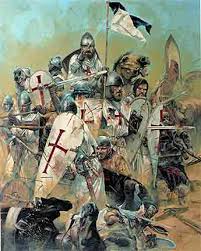
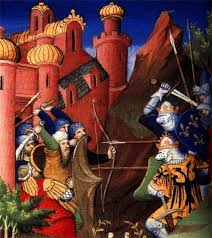
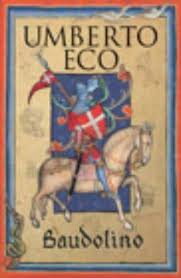
I have been reading around the Crusades as I have been travelling – they hold a fascination for me - Umberto Eco’s latest novel ‘Baudolino’ about the forth Crusade, under Barbarosa and the Frankish invasion of Constantinople (1204) 


This  weakened the city and contributed to its collapse and paved the way for the eventual Turkish / Selcuk takeover, under Sultan Mehmed II (the Conqueror) on 29 May 1453.


The determination of the westerners to conquer and colonise the lands of Byzantium was disastrous for the interests of Outremer. It was more disastrous still for western civilization. Constantinople was still the centre of the civilised Christian world. In the pages of Villehardouin we see reflected the impression that it made on the knights that had come from France and Italy to conquer it. They could not believe that so superb a city could exist on earth; it was of all cites the sovereign. Like most barbarian invaders, the men of the Fourth Crusade did not intend to destroy what they found. They meant to share it and dominate it. But their greed and their clumsiness led them to indulge in irreparable destruction….
Georges Tate ‘The Crusades & the Holy Land’ (1996,Thames&Hudson)

The Crusades that initially were meant to be all about liberating Jerusalem from Islam, in the complexity of the Middle East, became a pretext for the occupation of a ‘Christian’ city – Constantinople. It is a challenge that feeds into the current context, a sobering warning with Bush’s current ‘crusade’ against Terror, and those nations that harbour terrorists. Saddam Husein was seen by many Muslims as modern day Saladin. And Israel is perceived to be a crusader state. There is a real danger of polarisation, Crusade and Jihad. And a need for much wisdom and openness to dialogue.

The triumphs of the crusade were the triumphs of faith. But faith without wisdom is a dangerous thing. By the inexorable laws of history the whole world pays for the crimes and follies of each of its citizens. In the long sequence of interaction and fusion between Orient and Occident out of which our civilization has grown, the crusades were a tragic and destructive episode. The historian, as he gazes back across the centuries at their gallant story, must find his admiration overcast by sorrow at the witness that it bears to the limitations of human nature. There was so much courage and so little honour, so much devotion and so little understanding. High ideals were besmirched by cruelty and greed, enterprise and endurance by a blind and narrow self-righteousness; and the holy war itself was nothing more than a long act of intolerance in the name of God, which is the sin against the Holy Ghost’
Steven Runciman ‘A history of the Crusades’ vol 3 (1954)
Mission is also in the mind. It is about right attitudes as well as right action. But we need a ‘crucified mind, not a crusading, or coercive mind ‘ Mission is about ‘crossing boundaries, not crushing them.’ It is about serving, not sacrificing people.
Kosuke Koyama (1974) What makes a missionary ?

In the words of the protest song: ‘when will we ever learn, when will we ever learn?’

From your own correspondent

March 2004


TURKS: Journey of a Thousand Years, 600 - 1600

The Royal Academy of Arts has an Exhibition running from 22nd Jan – 12th April 2005 called
Turks: a Journey of 1000 Years - 600-1600 AD


Friday, January 16, 2004

RICHARD PENNER, KIA, Uzbekistan, January 13, 2004


RICHARD PENNER

Seattle Times 
Mennonite Brethren Herald

I had just come out of an all day Director’s meeting to hear the devastating news of Richard, the field director of World Concern, who was based in Afghanistan. The email read: ‘killed in a domestic plane crash in Tashkent Uzbekistan on Tuesday evening, Jan 13th, 2003’.

I sat at my computer in stunned disbelief for a long time. I was not able to keep back the tears. I remembered when I briefly heard the news, on the radio, of the air crash, wondering if anyone I knew was on it, but then thinking that the only person I really knew who had been in-country was Richard and he’d moved to Mazar-e-Sherif, so he couldn’t have been be affected!

He was a dear brother, with a wicked sense of humour and I will miss his wise contributions (and his not so wise, but witty ones!), borne out of years of experience in the field. He was doing a very similar job to me and we were together last November for meetings in Kabul. On that occasion he travelled with his wife, Ann and we’d all had a wonderful time of sharing and good fellowship (and good food) in a friend's house. We easily forget how precious, fragile and fleeting these moments are. I kept thinking it could so easily have been me, it could have been any one of us who travels frequently to board meetings around the world. It got to me very deeply indeed.


I have a prayer from Russia above my desk at work and my eyes were drawn towards it - particularly the second stanza - I share it with you all. It has become my prayer for Regional staff


The prayer of the last monks of the Optina Hermitage

Lord teach me to meet with peace of mind and spirit
All that the coming day has to bring me.
Help me to devote myself entirely to Your Holy Will
Guard and instruct and countenance me,
throughout every hour of this day.

Whatever the news that I receive today,
Help me to accept it in the calmness of my soul
And firm conviction that all is sustained by Your Holy Will.

In all my deeds and words –
be the leader to my emotions and my intentions
In the unforeseen consequence – do not let me forget
That you are the sender of everything

Teach me how to relate to my fellow brothers and sisters
Open and wisely and without hurting or confusing anyone

O Lord give me strength to endure
the fatigue of the coming day
And all the events that are due to unfold today.
Guard my will and teach me
To pray, to believe, to endure,
to forgive and to love. Amen

Monday, December 15, 2003

The Cross of Nails Sibui Romania


The Cross of Nails

Father make us one.
Don’t make ‘them’ like ‘us’,
Don’t make ‘us’ like ‘them’,
But make us all more like You.
The Cisnadioara Prayer© Steven Hughes 1994


Geoff and Gill Kimber have a ministry of reconciliation. As CMS mission partners, they head up the ‘Cross of Nails’ reconciliation work in Sibiu. It is run in partnership with the project they were previously associated with, ‘Ascensium’ in Cisnadioara.

Timothy and I were in Romania to attend the opening. It was a joyous affair, celebrated sensitively with a simple liturgy.


Based in a 3 room flat in the centre of the city, ‘The Cross of Nails Centre’ has a small library and reading room, for teaching English, meetings, and discussion groups.

One of the most encouraging aspects is the Orthodox Youth movement ‘Corpus Christi’, a lively group who use the rooms as their base. Many of them come from the local Seminary.
There is another group based there as well. ‘Darul Vietii’, literally ‘the gift of life’. This small group of Romanian social workers, psychologists, and medics have formed a pro-life group. Their aim is to establish an abortion education and counselling service the city of Sibiu and surrounding villages. They also educate about sexually transmitted diseases in a local hostel. Gill is supporting them as part of her diaconal ministry. They are also linked with ‘Primal Pas’ a similar CMS partner in Iasi (pronounced ‘yash’)

Geoff and Gill seek to establish relations with the Orthodox as well as the other denominations. They have good relations with the Lutheran bishop. But it is something of an ecumenical minefield. Making reconciliation all the more necessary.

Coventry Cathedral


I was also in Coventry the previous month for the CMS Conference. This is the home of the original Cross of Nails, birthed in the post war period, as Coventry sought ways of demonstrating reconciliation, particularly after its body but not its heart had been destroyed in the intensive bombing of WW2. The shell of the former cathedral stands as a moving memorial to this. In addition they started the Cross of Nails centre, which fosters various reconciliation groups around the world.


On the Saturday night of the conference we commemorated CMS’s world mission, starting at the ‘Freedom Tree’ in Sierra Leone, where many slaves were freed. As part of our celebrations, there was a wonderful carnival procession of butterflies, symbolising that freedom. The new creation found in Christ.


One of the most powerful moments was the simple song ‘God is so good’ sung in many languages, by people from many lands. It was real evidence of the ministry of reconciliation found in Christ, who breaks down the walls that divide and heals the enmity between people and nations.


Not so much Mohammad Ali, the world champion boxer’s motto: ‘Float like a butterfly: sting like a bee’ but maybe a motto for the kingdom: ‘float like a butterfly: sing in harmony!


From your own correspondent
Sibiu Romania (and  Coventry England) 
Dec 2003 (Nov 2003) 

Saturday, November 29, 2003

To live and to die for - Kabul - Nov 2003

See full size imageSee full size image
See full size image
See full size image


We did a project visit and it was great to see the chowkidar (watchman) from my old Office in Peshawar - He had been a medical student then and was doing night shifts to support his study. Now some 5 years later he is a doctor and running a basic health clinic and a small hospital for women and children in Kabul. It is very impressive work and he has a lovely 'spirit' to him.


I was told about Pul-e-Charki, the last main check post on the road from Jelalabad, before you get to Kabul. The same NGO has run a basic medical clinic there for years, all during the fighting. Apparently Coalition forces were doing live target practice on a range there and 4 children, who strayed onto the range, were accidentally killed. Both the community and the military were devastated and they offered to make amends in some way. After discussion with community elders, it was agreed that they would build a small kindergarten and a secondary school, plus a medical clinic for the community. They kept their word.

The community then insisted that this same NGO run the clinic since they were the only ones who had demonstrated any commitment to them over the past few years. It is being opened as a mother and child clinic.

So it was both a vote of confidence from the community and an example of hope thriving in the midst of despair - of good coming out of awful and evil situations.

See full size image
I haven't seen many UK International Security Assistance Force (ISAF) troops here so far. At present Canada is taking the lead but I did meet some of the Finnish troops. They were amazed to meet a Finnish lady who has been here 26 years working with an NGO. Her commitment impressed them no end. She was taking us on a brief 'tour' to the British Cemetery. It had been tidied up for Remembrance Sunday last week  and was looking very neat and green, especially after the rain.

I saw the grave of the Dutch/Finnish couple who had been murdered about 20 years ago resulting of the withdrawal of the whole NGO team in protest. There were other expats:   a Danish explorer, a British pilot; Czech, Polish, German, an Italian cyclist who had died in Kandahar  - There were also hippies, who had been in the ‘Dilaram House’ run by Floyd McClung in the 1970s. It was more of an International 'Christian' cemetery, than a British one and well reflected the international expatriate community in Kabul.
There was also one wall with gravestones from British troops, who had died during the second Afghan War in the 1870's – recently restored by current UK troops on duty in Afghanistan. And the opposite wall had memorial plaques to the troops of ISAF,  who had died as peacekeepers over the past 2 years. Including the Spanish troops whose plane crashed and the Germans, whose helicopter had been brought down, as they were leaving the country, on their way ‘home’ after a tour of peace-keeping duty.
 
It certainly makes you think - about people’s lives and what they stand for! And also what we live for and what are we prepared to die for?  


From your own correspondent

Kabul November 2003

Disaster Preparedness: Kabul Nov 2003


News From No Man's Land

Your correspondent here writing from Kabul, the city liberated by that other 'Simpson' - John Simpson of the BBC. No relation unfortunately.


On Monday I visited north of Kabul - the area called Shamali - it was the area where the Taliban had practiced their scorched earth policy and where many villagers were killed. We drove an hour or so in the back of a sturdy Landover.

It was good to see local people have returned and are starting to rebuild their lives - It had snowed the night before so it looked stunningly beautiful. We were in a village at 3,300 metres (started at around 1700 so a bit of a romp - nice to get out in to the open air, clean and fresh). Our local partner has been running a disaster preparedness programme, which includes teaching about earthquakes and flooding terrorism, war and how to survive. In addition there is a more basic programme of disease prevention through building simple toilet constructions - they provide some material (£50s worth) and the villages construct them. Good co-operation.


The villagers were very friendly and pleased to see us. It was Ramazan, but they wanted to give tea - which we declined, but they insisted we took an apple each for the journey. Wonderful hospitality from people so poor.


On the way we saw a mine at the side of the road, a foot or so from the wheel of the Landover, we took photos and took a reading on the GPS (Global Placement Satellite) and decided that on the way back we would mark the spot with stones and let de-mining know. So as we were returning a villager with us, bent down said 'that's not a mine and nonchalantly picked it up and threw it away!!' It was casing of some kind from a shell, but looked very authentic buried in the ground. It caused a bit of a laugh anyway.


There was a nasty shooting incident in Ghazni - a UN French lady shot and killed - just 29 years old and much respected locally. Apparently over 1000 vehicles followed the vehicle carrying the body back to Kabul as a sign of respect for the work of the International Community and disgust at the brutal killing - in Pushtoon culture, you DO NOT kill women - It is very much against ‘Puktoonwali’ - the cultural value system).


The UN are pulling out of the south, but continuing their work overall. It is yet another 'security incident' here in a yet unstable but ever hopeful Afghanistan.


From your own correspondent
November 2003

Monday, November 24, 2003

Hope Journeys Kabul Nov 2003


Mar Jan left Afghanistan for Iran to make enough money to marry. In Iran he became a heroin addict so he couldn't return to Afghanistan. Instead he went to Peshawar in Pakistan. ‘I was useless. I had dirty shoes, dirty clothes, and no one would let me into their home. I slept under a bridge for eight years and would eat thrown away food. Once I was accused of stealing and a policeman beat me on my head with his gun…There was no place for me to go… and no-one to help me except God….’

NEJAT  (a Persian, Pushtu & Urdu word meaning freedom, salvation, deliverance) started work in 1991. In Hayyatabad, Peshawar it provided a 20 bed facility for harm-reduction, detoxification and rehabilitation.
‘With a waiting list of over 3000, the centre provides residential care for 240 addicts each year, through its 3 stages of Reception - 2 months of preparation aimed at self motivation and harm reduction, Residential - 4 weeks detoxification, counselling and education, and Re-integration - one year follow up including job placement support’
ORA Annual Report 1999 ‘Hope Journeys’

This is the programme I used to work with as Drug Advisor, helping with the staff training and development programme.
The work expanded in four districts of remote Badakhshan, NE Afghanistan - Sheghnan, Ishkashem, Zebak and Wakhan. I was always impressed with the dedication of the Afghan staff, who walked overland to the centres for a fortnight and then spent a year in primitive conditions, often in extreme cold, dedicated to serving their people. When we went we drove 4 wheel-drives for 2 days to get there. A journey I will never forget. Refugee camp based detoxification programmes – in Khorasan, Jalozai and Akora Khattak - were also set up for women and children unable to attend a residential establishment. I remember visiting Uzbeks families who were re-establishing carpet weaving to break out of the poverty trap of addiction.
Over 10 years NEJAT treated around 9000 addicts including women and children, (c 4000 beneficiaries in Pakistan and c 5000 in Afghanistan). The work of the Nejat Centre Peshawar (1991-96) was externally evaluated and the report ‘Nejat the first 5 years’ suggests an impressive 2/3-success rate (66%) -very high in this field.


The NEJAT director on horse-back in remote Afghanistan


Qasim, the Director, is an ex Mujahhadin commander who fought against the Russians and is now fighting a war on Drugs. He has doggedly lead and built up a team of Afghans who are helping their own people tackle this debilitating problem. With increasing funding problems the programme has been run more and more on a voluntary basis. As I look back I am struck by the overwhelming needs, extremes conditions, high staff commitment, which contribute to the uniqueness of the project. They are helping to create civil society through the various tribal groups co-operating in the programme- Pathans, Tajiks, Uzbeks, Hazaras, Afghans and Pakistanis together. No mean achievement in an increasingly fragmented society.

Now the work has shifted to Kabul and the other centres closed down. It is a new phase. It almost feels like the old has died and they are starting all over again. But Nejat continued to make a significant contribution to rebuilding lives and thus rebuilding Afghanistan. Hope journeys on.

******
Mar Jan was helped by NEJAT workers who met him under the bridge and invited him to become a friend (‘dost’): ‘I couldn’t believe it, how could they be friends with someone like me. The smell from my head wound was so bad that no one could be around me. I went with my new friends and they made me have a bath, they dressed my head wound and cleaned out the lice, and I was admitted into their rehabilitation centre…. Now I am well and my head injury is completely healed. I am working as a volunteer at the NEJAT centre. My previous drug user friends do not even recognize me. They think that Mar Jan died'

from your own correspondence

NEJAT, Kabul, Nov 2003
(and Peshawar 1996-98)


A recent Times article on Nejat can be found on the BBC website

Afghanistan's home-grown drug problem
The BBC's Andrew North   By Andrew North BBC correspondent in Kabu

Wednesday, November 19, 2003

Let go and Let God Islamabad Nov 2003


Let Go and Let God

I travelled to Islamabad on Thursday and had 24 hours with our CMS people there. Carol and Roger work with ICAN (Islamabad Christians Against Narcotics) and Nigel and Joan are good down to earth Yorkshire folk (he was an ambulance chief). They have just arrived and are starting language study. They will be going to Quetta Mission Hospital - mispronounced locally as Machine Hospital ! where he will be administrator and she will initially teach English to medical staff.

See full size image

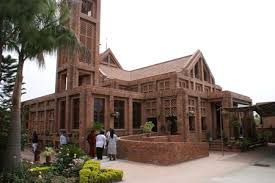
We visited ICAN and I enjoyed talking to addicts again. It made me feel at home and took me back to our Ibtida years in Karachi (1986-1996) – In fact IBTIDA originally helped ‘birth’ ICAN at the invitation of a CMS MP at the time Rev Graham Burton, who was vicar of St Thomas’s Islamabad.

The programme is struggling with funding, but has just managed to get an interim contract, where they do a 10-day detox for another programme - Nai Zindegi (New Life). It’s not ideal but it keeps them going. Aamir’s vision is to re-establish themselves as a Christian Drug Rehab, offering spiritual treatment based on the 12-step programme. CMS has been supporting the project through an annual grant, and personnel who can help with staff training. Aamir attended the ISAACS training programme at the Freedom Centre in Wadi Natroun, Egypt and this has encouraged his vision to ‘let go and let God’

He is a part of the ISAAC drug network and also chairman of the Pakistani Drug and Aids Workers Network (DAWN) We met most recently at the ISAAC training conference in Spain in May.


St Thomas's Church is ICAN’s spiritual base, as well as home church to a Pakistani working in Kabul. Shakeel is helping to capacity build and train the personnel there, both expat and Afghan. He is a very gentle guy and really good for this International NGO. He is their first Pakistani team member, having worked previously for another partner organisation in Pakistan - DOER Trust. DOER stands for the development of existing resources. Exactly what Shakeel is good at.

Unfortunately Rev Irfan Jamil, the new vicar of St Thomas’s (and possibly the best scrabble player in Pakistan!) was in Lahore, so we could not meet up.
See full size image


There's never enough time when I visit Pakistan and I always get in trouble for not meeting some people.


From your own correspondent

Islamabad
Nov 2003