Sunday, September 30, 2001

September 11th, 2001


September 11th, 2001

After the accounting of the dead,
when the insurance claims are settled,
and the markets are back to their normal jittery selves,
we have all seen what Hell looks like. In future
we will avoid tall buildings, slowly move away
from cities, fly less often, view
our fellow passengers with circumspection,
seek refuge in more virtual reality and trade
within the safer evils of the Internet.
We listen doubtfully to our leaders' words
as they struggle to fill their own shoes.
Four planes just flew out of Pandora's box,
and when men armed just with razor blades can bring
the whole wide world up to a juddering halt
we know too much and care too little
to believe that this will be the last time.
The big game of Monopoly is over.
The losers' tantrums have become too dangerous.
Even before our anger cools we see
the moral high ground is just
a pile of smoking rubble. Jesus kneels
and writes with his index finger in
the white dust of Manhattan:
Let him who is without sin
launch the first missile.

Who is our enemy
and what can we fight him with?
Where are our allies? Where was God
on September the Eleventh? He was begging
in old clothes in the subway
beneath the World Trade Centre.
He was homeless in Gaza,
imprisoned in Afghanistan,
starving in Somalia,
dying of Aids in an Angolan slum,
suffering everywhere in this fast-shrinking world;
and boarding a plane unwittingly in Boston,
heading for a meeting on the 110th floor.
When the time came he stretched his arms out once again
to take the dreadful impact that would pierce his side.
His last message on his fading cell phone
once more to ask forgiveness for them all, before
his body fell under the weight of so much evil.
We bring our cameras to his massive tomb
for any chance of resurrection; now we know
the kind of story that it really is,
united by this common enemy -
sin's terrorism - that we never dreamed
could bring such devastation. This is war.
We line our weapons up: faith, hope, obedience,
prayer, forgiveness, justice;
the explosive power of love.

(c) Godfrey Rust

May be used or copied freely for non-commercial purposes. godfrey@wordsout.co.uk

Thursday, September 27, 2001

Back to the Frontier: PESHAWAR Sept 2001


Inhabited by fierce warlike tribes, the region that became known as the North-West Frontier has always guarded the western border of the sub-continent. The hilly, arid region that is now south eastern Afghanistan and north-western Pakistan has since ancient times been the Pathan’s homeland’ (Pukhtoonkwar)
The Pathans are one of the world’s great warrior races and yet the ‘jirga’ system, upon which their society is based, is one of the oldest democratic systems known to man.
The independent spirit of the Pathans was behind the immortal words uttered by the 17th century Pathan Poet, Khushal Khan Khattak when he resigned from the Moghul army: ‘So long as I was an officer, I was a servant; the office gone, I am a King!’


Imran Khan’s ‘Warrior Race: a journey through the land of the Tribal Pathans’ (Chatto and Windus, 1993) The Pakistani international cricketer getting in touch with his Pathan background.


Introduction & Overview 
The North West Frontier Province (NWFP) is the wild-west of Pakistan, part of the untamed, semi-autonomous FATA areas (Federally Administered Tribal Areas). Pathan culture is one of the oldest democracies, with the ‘Shura’ (village elders) system, and a strong tribal code ‘Paktoonwali’ with its emphasis on honour and shame, relationship and revenge, hospitality and hostility. Women are closely guarded and cocooned behind ‘chadar and chaar diwaar’ (cloth covering and 4 walls)

Steeped in history, this is where Churchill as a war correspondent took pot-shots at Hill Tribeman (as recounted in ‘My Early Life’). Untamed by the British Raj, it was a final outpost of the Empire before the Durand Line, running through Afghanistan along the line of the Oxus River (now the Amu Darya) separating the ‘British Lion’ from the ‘Russian Bear’. This is where the Great Game was played immortalised by Kipling’s Kim. Full of romanticism, adventure, treachery. Boy’s Own country.

Since the Russian Invasion of Afghanistan in 1979, Peshawar has been also been ‘deluged’ with over a million Afghan refugees. It has been a hot-bed of intrigue, drug smuggling (Afghanistan is the World’s No. 1 producer of opium) and guns (Darra Village where any weapon can be copied and Kalashnokovs sells for a few pounds). This is all symbolised by ‘The Khyber Pass’, connecting Afghanistan and Pakistan.

35Km from the Khyber Pass lies Peshawar . The first Afghan refugees began trickling in, in mid 1978 and it soon became a deluge. As a result of the war, Peshawar began to establish itself as a principal humanitarian centre and launching pad for ‘diplomats, reporters, intelligent agents, war junkies, smugglers, drug enforcement officials and various travellers’. By the late 80s some 200 international agencies and NGOs had established operation bases in the town. ‘It had returned to some of the exhilarating frontier flavour of Kipling’s India’ Even today when the number of NGOs have been greatly reduced, ‘Peshawar will remain a Pakistani-Afghan commercial centre whether for licit or illicit trade’Peshawar is in effect a three-in-one town, the traditional Old City with its colourful and chaotic bazaars, the tranquil and clean Military Cantonment, with its gardens, sports centres and Institutions and University Town, the International expatriate and NGO hub.

Crosslines Guide to Afghanistan, op cit, pg 361

I spent 12 years in Pakistan, so I feel I know it well, maybe too well. But my time was spent mainly in Karachi in the South with nearly 3 years in Peshawar in the North. But the NWFP and the Afghans got into my system in a significant and powerful way.

Every time I return something strikes me. This last time it was the Red Mountain, which has sprung up in urban centres, a grotesque, luminescent model of the mountain nuclear test site, which enthralled the Nation on TV, as it glowed an angry red in response to the Indian atomic challenge. An effigy to Pakistan as a Nuclear Power.


Thursday, September 20, 2001

Breaking News Sept 2001

BREAKING NEWS ……………BREAKING NEWS …..…………..BREAKING NEWS


EXODUS
See full size image

Afghanistan is headlines in the Global News Media. Afghan Refugees trying to walk through the Tunnel from Calais to Dover. A shipload of 500 seeking asylum on a cargo ship near Christmas Island. A contemporary ‘Exodus’ is underway. Afghans fleeing drought and war and the increasingly repressive Taliban regime.


ACCUSED
See full size image

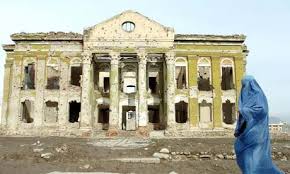
A month ago the Taliban arrested 8 expat and 16 Afghan NGO workers with Shelter Now International (SNI) accusing them of proselytising. On trial in a closed court under Shariat Law, they face increasingly probable execution. How do we protest ? International pressure does not work - the Statues of the blind Buddha of Bamyan were blown up in spite of, or perhaps because of, world media pressure.
‘World leaders…. are on a hiding to nothing if they think they can undermine the Taliban or other manifestation of Islamic fundamentalism from outside. They have to stay seriously listening to such movements and perhaps even recognise the right of countries to govern their own affairs even in ways which are not democratic. But for now, every effort must be made to seek clemency for aid workers whose only crime is to take their faith as seriously as do the Taliban’.
Andrew Carey ‘Saving the Afghan Aid workers’ CEN Aug 17th

CLOSED DOWN
See full size image

The next stage in the drama came when 2 other Christian NGOs: Serve and the International Assistance Mission were also closed down by the Taliban and given 3 days to leave the country. All assets were ‘confiscated’ by the Government . 

‘Despite recent events in Afghanistan, IAM is stunned by the sudden and total closure of its activities. The IAM is very concerned about the effects of this action both on local staff and programme beneficiaries. Hundreds and thousands of people will be deprived of vital assistance at this critical time.’
IAM Press release 1st Sept

ATTACKED
See full size image

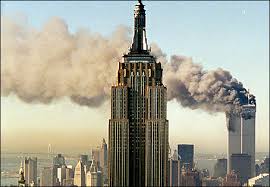
Then came the Big One. The terrorist attacks on New York and Washington that shocked us all. How could they do it? The world will indeed ‘never be the same again.’ An International Terrorist Conspiracy. Or is it modern Chaos or Complexity theory? Lorenz’s famous phrase ‘A butterfly flaps its wings in South America and results in a Hurricane on the other side of the world’ Those terrorist ‘butterflies’ in the US have certainly unleashed a military ‘hurricane’ which threatens to destabilise the whole of Central Asia and the Middle East. 

Situation in Pakistan is very calm at the moment. It will be different when there is a war or attack on Afghanistan. …. No Church has been burnt in Punjab so far.
Bishop S.K. Dass of Hyderabad (18/9) 

BROKEN
See full size image

For all of us, this is heart-breaking News. Many mission partners have had to leave Pakistan. All Humanitarian Aid workers have left Afghanistan. The only ones left are those in custody in Kabul. And many Afghans are desperate to leave as well, refugees piling up on the borders. The UN are making preparations for a massive human disaster - the feeding of the 5 million. 


Doves and Hawks 
See full size image

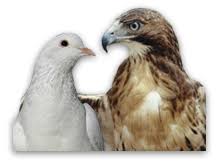
‘Blood cries out for blood’. People call for Retaliation and Restraint. The Doves and the Hawks debate. But the Broken One cries out ‘Father forgive’ even as He gives his blood for the world.


from your own correspondent 

printed in YES magazine Sept 2001

Thursday, April 19, 2001

Return of the Prodigal The hermitage St Petersberg April 2001


The Return of the Prodigal 
Harmensz van Rijn Rembrant (1606- 1669)

‘He painted father and son, God and humanity, Compassion and misery in one circle of love’ (pg7)

See full size image
‘The younger brother allows himself to be held in a forgiving embrace (found) The elder brother stands back, looks at his fathers merciful gesture and yet cannot step over his anger (lost)’


‘Here is the God I want to believe in : a Father who, from the beginning of creation, has stretched out his arms in merciful blessing, never forcing himself on anyone, but always waiting, never letting his arms drops down in despair, but always hoping thatb his children will return so that he can speak words of love to them and let hs tired arms rest on their shoulders. His only desire is to bless’ (p 95/6)

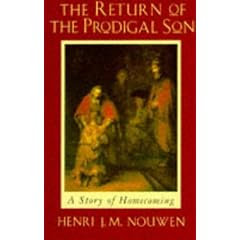
Ever since I read the book, I have wanted to take the opportunity of visiting St Petersberg, and to do a ‘Henri Neuwen’. He had spent hours contemplating Rembrant’s painting and he wrote his spiritual treatise – The Return of the Prodigal Son - as a result.

There was long queue outside the Hermitage, but as always a fast track entrance was available. Once inside, I made a beeline for the Rembrant collection.
See full size image


‘My heart leapt when I saw it …After my long self -exploring journey, the tender embrace of father and son expressed everything I desired at that moment. I was indeed the son exhausted from long travels. I wanted to be embraced. I was longing for a home where I could feel safe. The son-come-home was all I was and wanted to be. For so long I had been going from place to place: confronting, beseeching, admonishing and consoling. Now I desired only to rest safely in a place where I could feel safe at home.’ (pg 5)


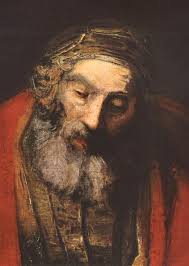
The Hermitage acquired the painting in 1766, from the Duke of Amezune’s collection Paris. It is based on the story of the ‘prodigal son’ in Luke 15: 20-24. The light focuses on the kneeling son and stooped father in gentle embrace, who embody repentance and forgiveness. Three other dark characters look on indifferently from the shadows. The older sons stands aloof -
‘I never had run away from home…. Never wasted my time and money in sensual pursuits and never gotten lost in ‘debauchery and drunkenness’. For my entire life, I had been quite responsible, traditional and homebound. But with all that, I may in fact have been just as lost as the younger son. I suddenly saw myself in a completely new way. I saw my jealousy, my anger, my touchiness, doggedness and sullenness and most of all my subtle self-righteousness. I saw how much of a complainer I was and how much of my thinking and feeling was ridden with resentment. For a time it became impossible to see how I could ever have thought of myself as the younger son. I was the elder son for sure, but just as lost as his younger brother, even though I had stayed ‘home’ all my life’. (pg 20)

See full size imageThe father has prominent hands: Neuwen suggests a strong male left and softer female right, resting on the sons back, capturing the androgyny of God. The bare head and calloused foot of the son, clothes, torn and filthy, suggest hardship and exposure. The rich red cloth on the fathers shoulders, paralleled by the elder son on the right, suggest opulence. This is reinforced by the size of the painting, maybe 10’ x 6’, in its rich gold frame. Groups stop, English, Japanese, Russian, Italian, German and spend a few minutes, with commentary from their respective guide - and then they move on. There are lots of other paintings to see. Individuals sit and read the explanation and contemplate.
See full size image

It is indeed a wonderful painting, rich in biblical meaning. Neuwen expresses its message and mission so well:

‘Whether you are the younger son or the elder son, you have to realise that you are called to become the father. The time has come to claim your true vocation - to be a father who can welcome his children home without asking them any questions and without wanting anything from them in return. Not a good friend or a kind brother… a father who can claim for himself the authority of true compassion.’ (pg 22)


From your own correspondent

The Hermitage,
St Petersberg, April 2001

Tuesday, February 20, 2001

Jerusalem - the divided city Oct 1999 and Feb 2001


‘Jerusalem the Golden’


It was over 20 years since I first visited Israel. Then as a student, I was full of Leon Uris’s ‘Exodus’ and the Kibbutz dream. My views have changed over the years. Everything seems a lot more complicated.

Jerusalem is a divided city, with the Jewish ‘New Jerusalem’ next to the old walled city of Jerusalem. And the old city itself divided into quarters: Muslim (Arabs), Jewish (Israelis), Christian (Palestinian) and Armenian. All three major religions of the book, consider it theirs. Jerusalem the Golden, the City of Peace.


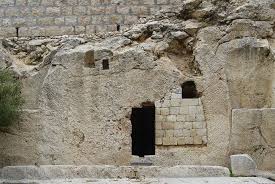
For me the Old city starts at the Damascus Gate, entrance to the Arab quarter, and on through the maze of streets, into the heart of Jerusalem along the ‘Via Dolorosa’: the Way of the Cross which leads to the Church of Holy Sepulchre, ‘the centre of the earth’ as it has been called. Emperor Constantine’s mother, Helena, found the ‘rightful site of the Crucifixion and Resurrection’, as well as relics such as wood from the True Cross, ‘with miraculous aid seldom now vouchsafed to archaeologists!’  


In many ways it is a shabby centre of Christianity. I was appalled when I saw it the first time. In those days, like all good evangelicals, I preferred the simplicity of General Gordon’s Calvary: ‘The Garden Tomb’.


Bettina Selby in ‘Riding to Jerusalem’ calls the Church of the Holy Sepulchre a
‘thoroughly unsatisfactory building’
This was at the end of a long and arduous bike ride across Europe, Turkey, Syria following the route of the Crusades It was obviously an anti-climax
‘chopped up as it is into so many chapels, with a different branch of the Christian Church jealously guarding each portion. As for peace - that was in sort supply – with flash bulbs going off in constant burst…… even in the Holy Tomb itself!’


It seemed to hold a lot more charm for me now. An Egyptian Coptic Orthodox Priest inviting me to touch the sacred stone, a Catholic Priest preaching the love of God, a Korean Anglican Communion: ‘Do this in remembrance of me’. Now such diversity speaks to me much more of the church universal.
See full size image


I had promised to light some candles and pray for some Pakistani brothers, recovering addicts, in the Sepulchre itself. Something they could never contemplate doing for themselves, since Pakistan does not recognise the State of Israel. So I found a moment of quiet and lit three candles and prayed that they would be ‘lights shining in the darkness.’

I must also admit to taking some photos ‘in the Holy Tomb itself’, flash an’ all!


CMS at the Wailing Wall


From Your own correspondent

October 1999
& February 2001